Nusa Lembongan is a small island off the coast of Bali that feels a world away from the busy streets of Canggu and Seminyak. Known for its beautiful beaches, turquoise waters, laid-back atmosphere, and excellent snorkelling and diving, it has become one of the most popular island escapes in Bali.
Despite being just a short boat ride from the mainland, life moves at a much slower pace here. You’ll find dramatic coastal scenery, beach clubs overlooking the ocean, quiet stretches of sand, and easy access to neighbouring islands such as Nusa Ceningan and Nusa Penida.
In this guide to Nusa Lembongan, we’ll cover everything you need to know before you visit, from how to get there and what to do, to the best places to eat, stay, and explore.
TL;DR: Summary Of Nusa Lembongan
- Nusa Lembongan is a relaxed island destination around 30 minutes by boat from Bali, known for beaches, diving, and snorkelling.
- Highlights include Devil’s Tear, Dream Beach, the Yellow Bridge, seaweed farms, and the island’s mangrove forest
- Nusa Ceningan and Nusa Penida are easy to visit from Nusa Lembongan, making it a great base for exploring the other islands.
- Despite its popularity, Nusa Lembongan retains a laid-back atmosphere, with great restaurants, beach clubs, and accommodation for all budgets.
Where Is Nusa Lembongan?
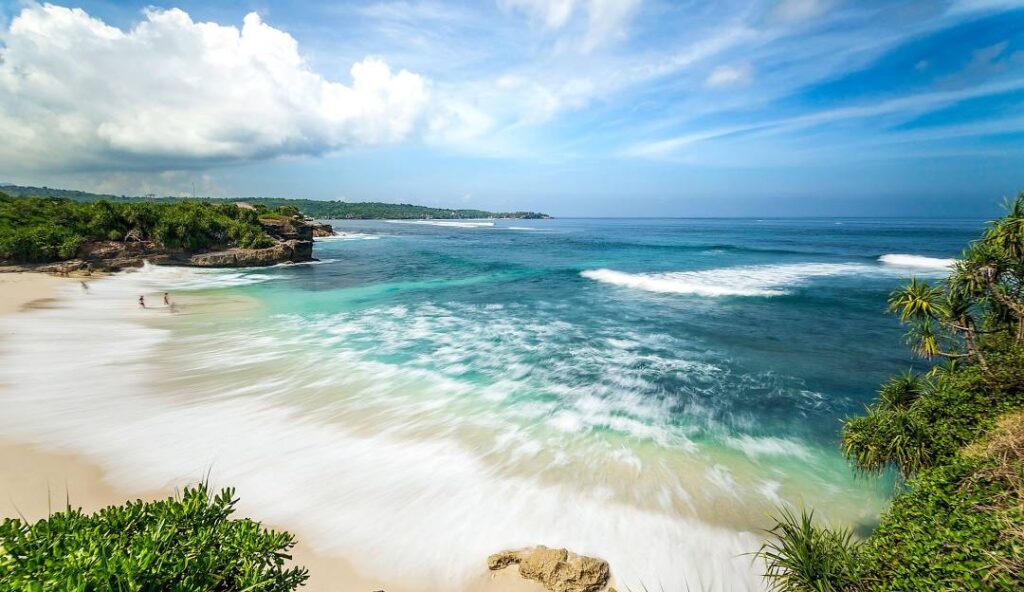
Around 30 minutes by fast boat from Sanur, Nusa Lembongan is a small island just off Bali’s southeast coast in the Badung Strait.
The island is part of the Nusa Islands, a trio of neighbouring islands comprising Nusa Lembongan, Nusa Ceningan, and Nusa Penida. Of the three, Nusa Penida is the largest and most famous, while Nusa Lembongan is generally considered the most developed for tourism.
Administratively, all three islands fall within the Nusa Penida district of Bali Province. Many visitors use Nusa Lembongan as a base for exploring the wider island group, thanks to its good range of accommodation, and transport connections.
Although it’s often included as part of a Bali itinerary, Nusa Lembongan has a character all of its own.
What’s Nusa Lembongan Like?
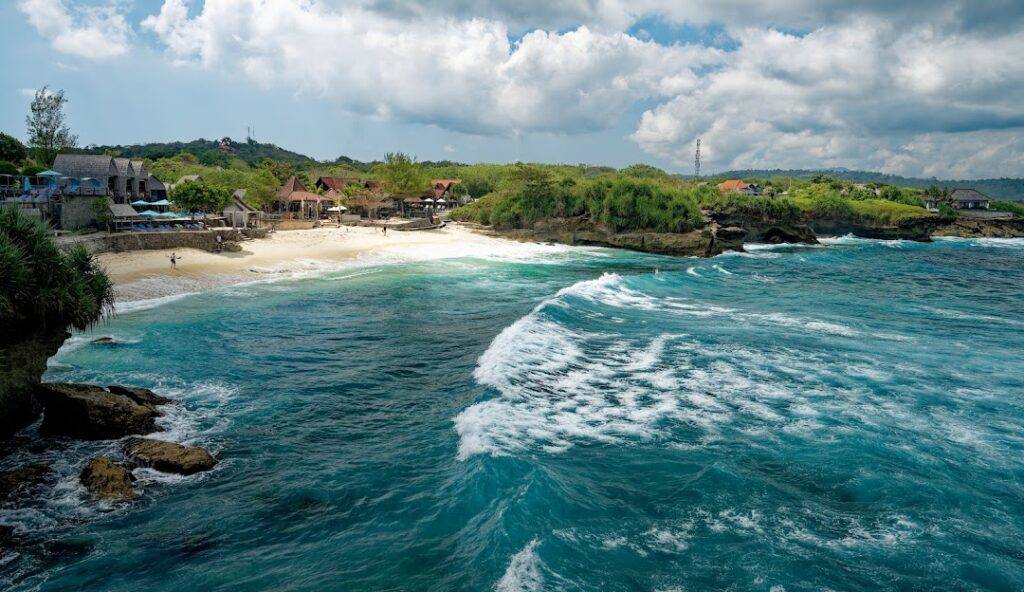
While mainland Bali has become one of the world’s most popular tourist destinations, Nusa Lembongan offers a much slower pace of life. Despite being only a short boat ride from Sanur, the island feels far removed from the traffic, crowds, and busy streets of Bali’s main tourist hubs.
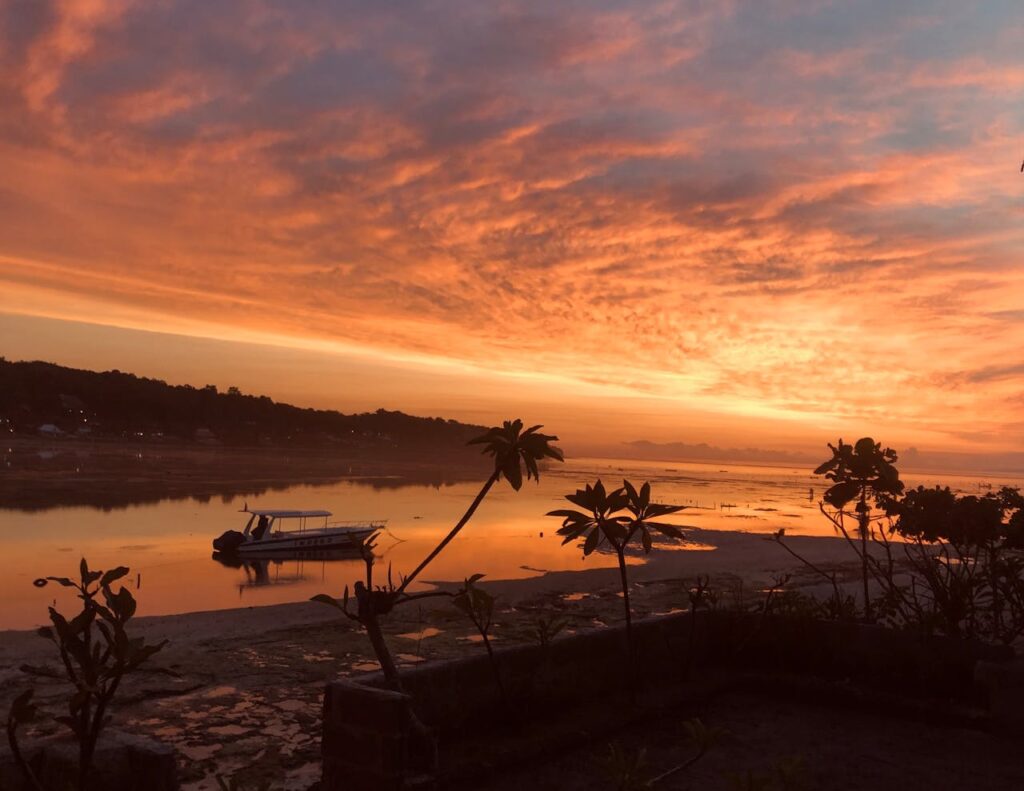
Life here revolves around the ocean. Days are spent surfing, snorkelling, diving, exploring hidden coves, or simply relaxing on the beach. Traditional seaweed farms can still be found around parts of the coastline, while fishing boats and small village communities give the island an authentic feel.
While there are plenty of places to eat, drink, and stay, Nusa Lembongan has managed to retain a laid-back atmosphere that many visitors feel has disappeared from some parts of mainland Bali.


For travellers looking to slow down, enjoy beautiful scenery, and experience a quieter side of life, this beautiful island is one of the most rewarding destinations in Bali.
How To Get To Nusa Lembongan
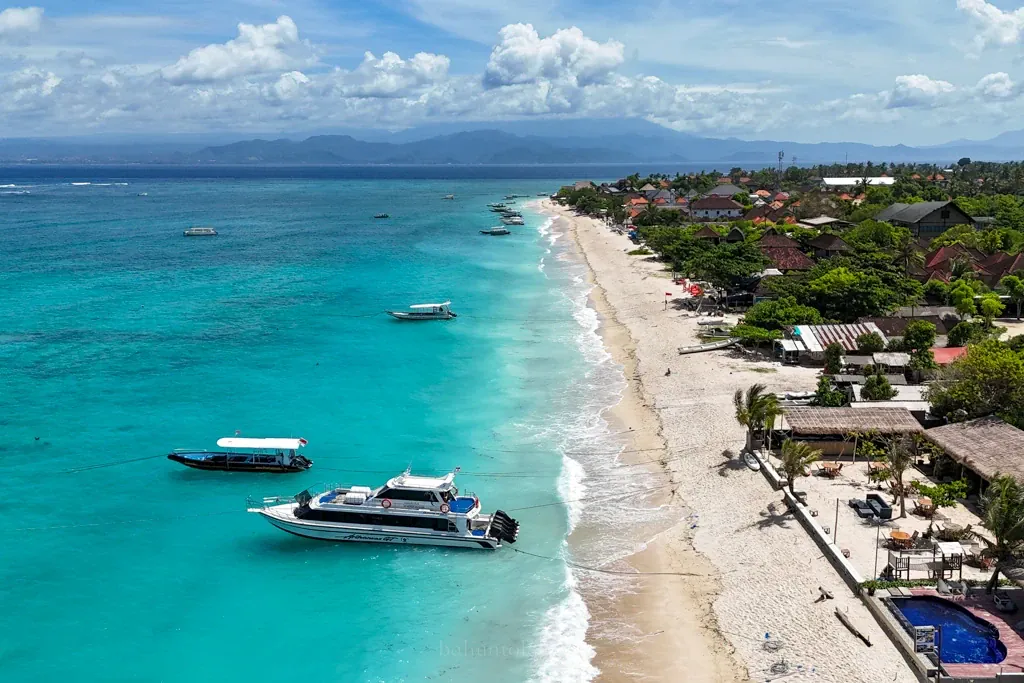
Most visitors reach Nusa Lembongan by fast boat from Sanur on Bali’s southeast coast. The journey usually takes around 30 to 40 minutes, with multiple departures available throughout the day. Many operators also offer hotel transfers from popular areas such as Canggu, Seminyak, Ubud, and Kuta, making the journey relatively straightforward.
Nusa Lembongan is also a popular destination for day trips from mainland Bali. Organised tours often include return boat transfers and activities such as snorkelling, sightseeing, or visits to neighbouring islands.
If you’re already exploring the Nusa Islands, travelling between Nusa Lembongan, Nusa Ceningan, and Nusa Penida is easy. Nusa Ceningan is connected to Lembongan by the famous Yellow Bridge, while regular boats operate between Lembongan and Nusa Penida throughout the day.
Although Nusa Penida now has a small airport, most people still arrive by boat from mainland Bali.
How To Get Around Nusa Lembongan
One of the best things about Nusa Lembongan is how compact the island is. The entire island can be explored relatively easily, with many beaches, restaurants, cafes, and attractions located within walking distance of one another, particularly around popular areas such as Jungut Batu and Mushroom Bay.
For exploring further afield, many visitors choose to get around by scooter, though we recommend against this unless you’re fully licensed and experienced. Luckily, bicycles, golf buggies, and private drivers are also popular and widely available, and can often be arranged through most hotels. The roads are generally much quieter than the mainland, although some routes can be narrow, steep, or uneven in places.
Unlike the mainland, ride-hailing apps such as Grab and Gojek are not widely available on the island. While there are cars and local transport services, most visitors find that walking, cycling, or using a scooter is enough to reach the majority of attractions.
Nusa Ceningan is connected to Lembongan by the iconic Yellow Bridge, making it easy to explore both islands during your stay. Thanks to the island’s small size and relaxed pace of life, getting around Nusa Lembongan is usually simple and stress-free.
When Is The Best Time To Visit Nusa Lembongan?
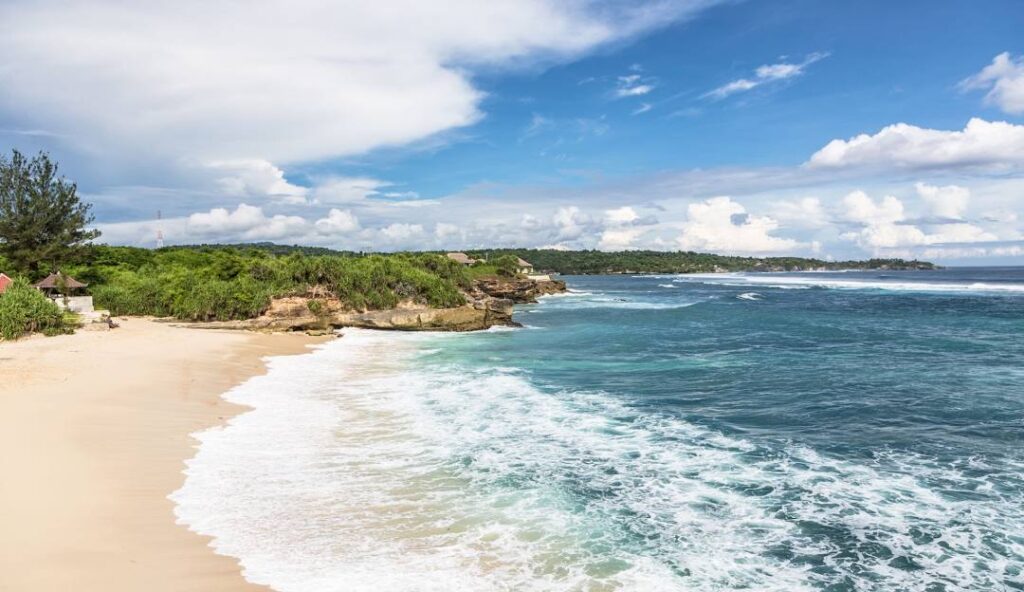
Nusa Lembongan is a year-round destination, but the dry season between April and October is generally considered the best time to visit. During these months, visitors can expect plenty of sunshine, calm seas, and excellent conditions for snorkelling, diving, boat trips, and beach days.
The wet season is still a good time to visit. Like mainland Bali, rain often arrives in short, heavy bursts rather than lasting all day; in fact, you can expect sunny skies for most of the day. However, occasional spells of bad weather do occur, particularly during the peak of the rainy season.


One thing to keep in mind is that Nusa Lembongan has fewer indoor attractions than mainland Bali. As much of the island’s appeal revolves around beaches, water activities, and outdoor adventures, extended periods of rain can have a bigger impact on your plans.
It’s also worth noting that under extreme weather conditions, the boat journey may be rough at the best, and cancelled altogether at worst. Keep an eye on the weather forecasts and plan accordingly.
Things To See And Do In Nusa Lembongan
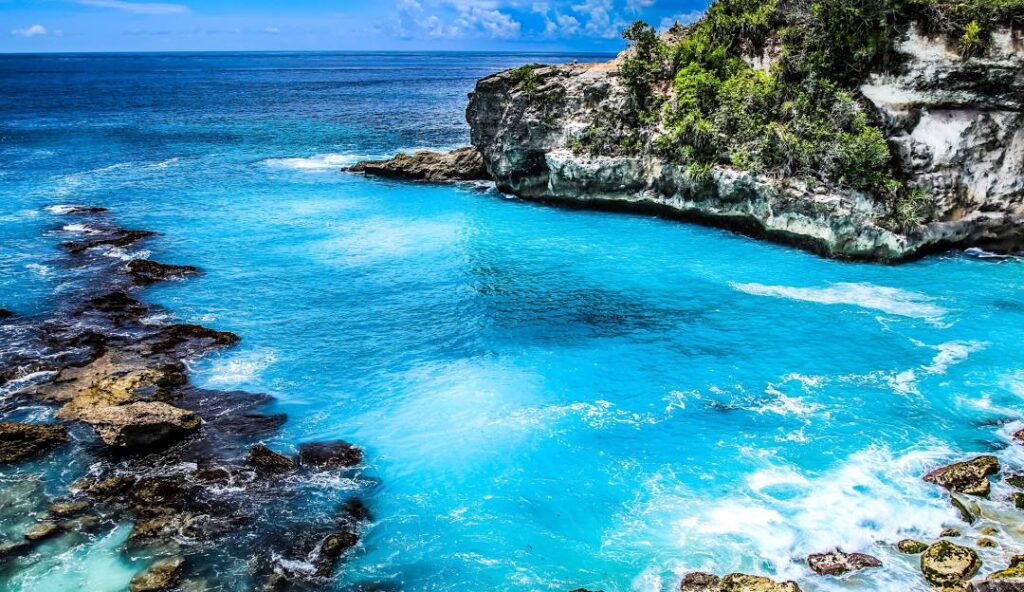
Nusa Lembongan may be a small island, but there’s no shortage of things to see and do. Whether you want to relax by the ocean, discover hidden corners of the coastline, or get out on the water, you’ll find plenty of attractions packed into a relatively small area.
Devil’s Tear
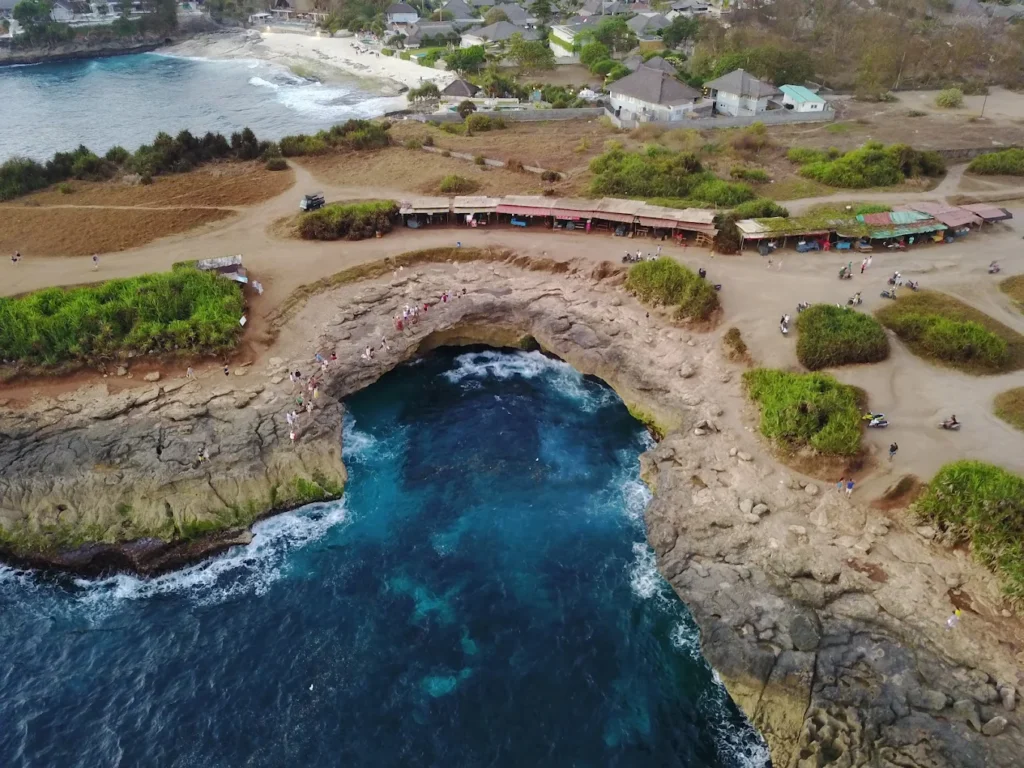
Devil’s Tear is one of Nusa Lembongan’s most famous attractions. Located on the island’s southwest coast, this rugged stretch of coastline is known for powerful waves that crash against the rugged cliffs below, sending huge plumes of spray high into the air.
The viewpoint is particularly popular around sunset, when the ocean is illuminated by the changing light, as the sun drops behind Bali across the strait. Conditions vary throughout the day, but during high tide and rough seas, the spectacle can be especially dramatic.
While the views are impressive, you should always take care around the cliff edges, particularly when waves crash unexpectedly. The raw power of the ocean is what makes Devil’s Tear so memorable, but it’s also what demands respect.
Snorkelling And Scuba Diving
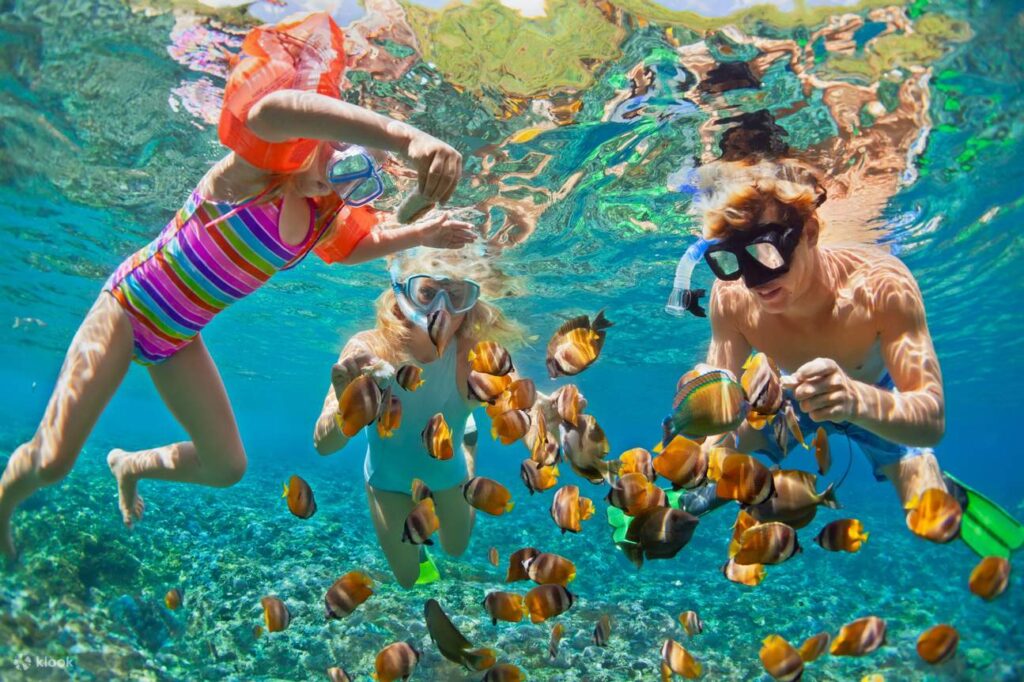
Nusa Lembongan is one of Bali’s most popular destinations for snorkelling and scuba diving. In some areas, you can snorkel directly from the beach, while organised boat trips can take you to nearby reefs and some of the best marine sites around the islands.
Many snorkelling tours also visit places around neighbouring islands such as Manta Point or Gamat Bay off Nusa Penida, with the chance to spot colourful corals, tropical fish, turtles, and even manta rays in the right season. If you’re staying on the Bali mainland, you’ll also find day trips that include boat transfers to Nusa Lembongan and snorkelling excursions around the islands.
Scuba diving is equally popular, with dive shops offering everything from beginner experiences to advanced dives. Whether you’re exploring coral reefs close to shore or heading out by boat to deeper sites, there is plenty to see beneath the surface.
As with all ocean activities, it’s important to pay attention to local conditions. Strong currents can occur around the islands, particularly at some of the more exposed dive and snorkelling sites.
Explore The Mangrove Forest
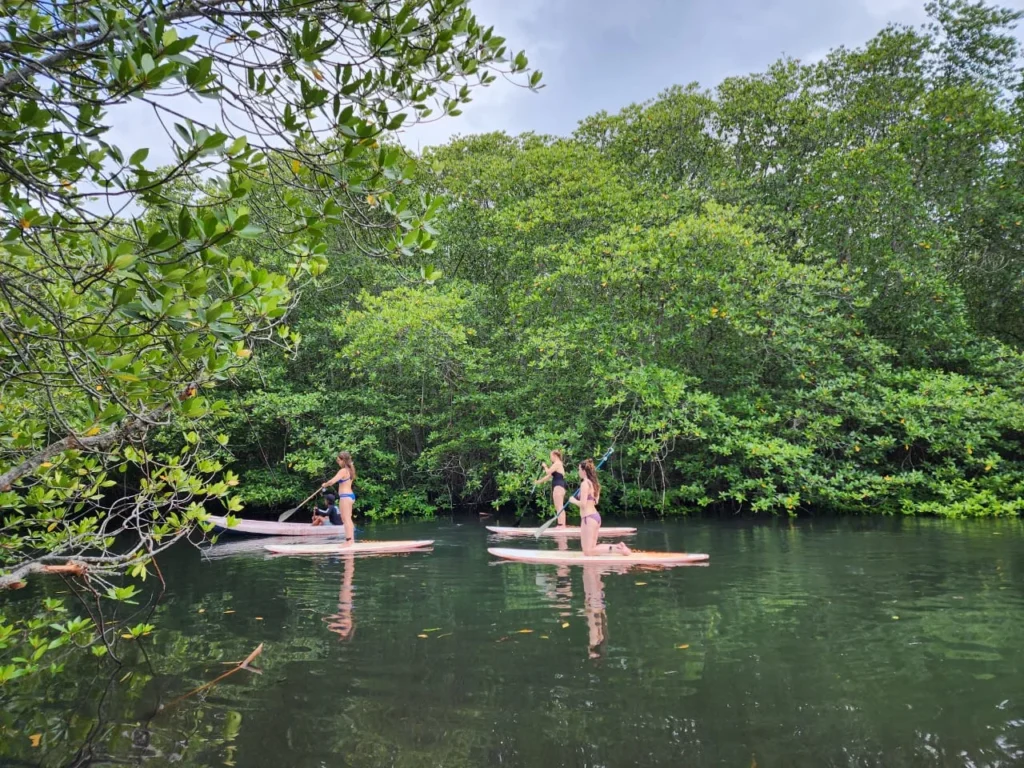
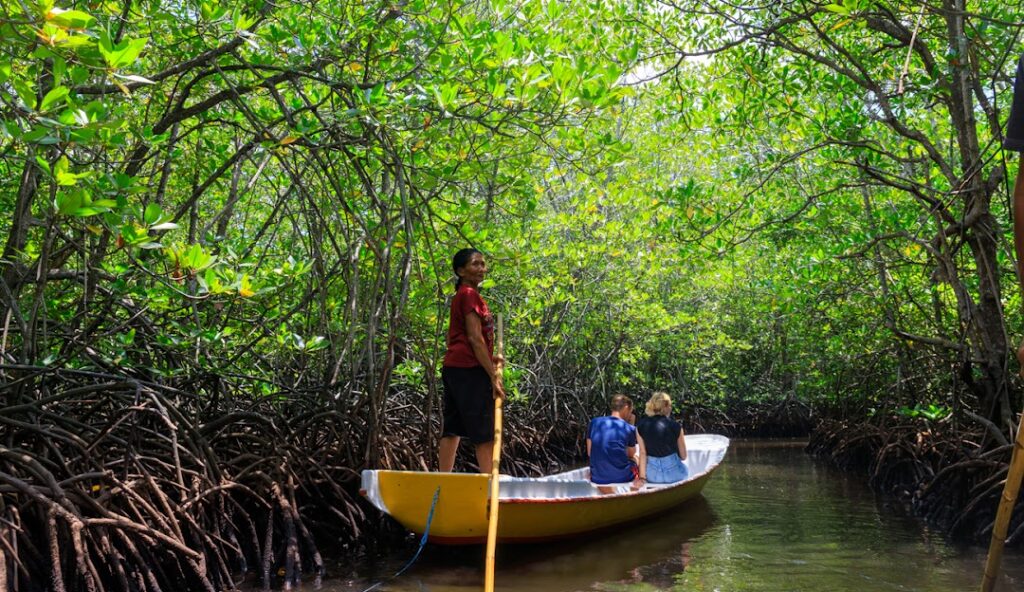
The mangrove forest on the island’s northeast coast offers a different side of Nusa Lembongan. Away from the beaches and coastal viewpoints, this peaceful area is home to winding waterways lined with dense mangrove trees that help protect the shoreline and support local marine life.


Visitors can explore the mangrove forest by kayak, paddleboard, or traditional boat, with local guides offering tours through the narrow channels. It’s a relaxing way to experience the island’s natural environment and escape the busier tourist areas.
You might encounter some monitor lizards or even the occasional vine snake there, but there’s nothing that can harm you, so don’t worry. The real dangers are the strong undercurrents where the mangroves meet the open ocean, so as always, take care if entering the water.
The nearby Mangrove Point area is also known for its snorkelling and diving, with healthy coral reefs and abundant marine life found just offshore. Combined with the forest itself, it makes this part of the island well worth exploring.
Yellow Bridge
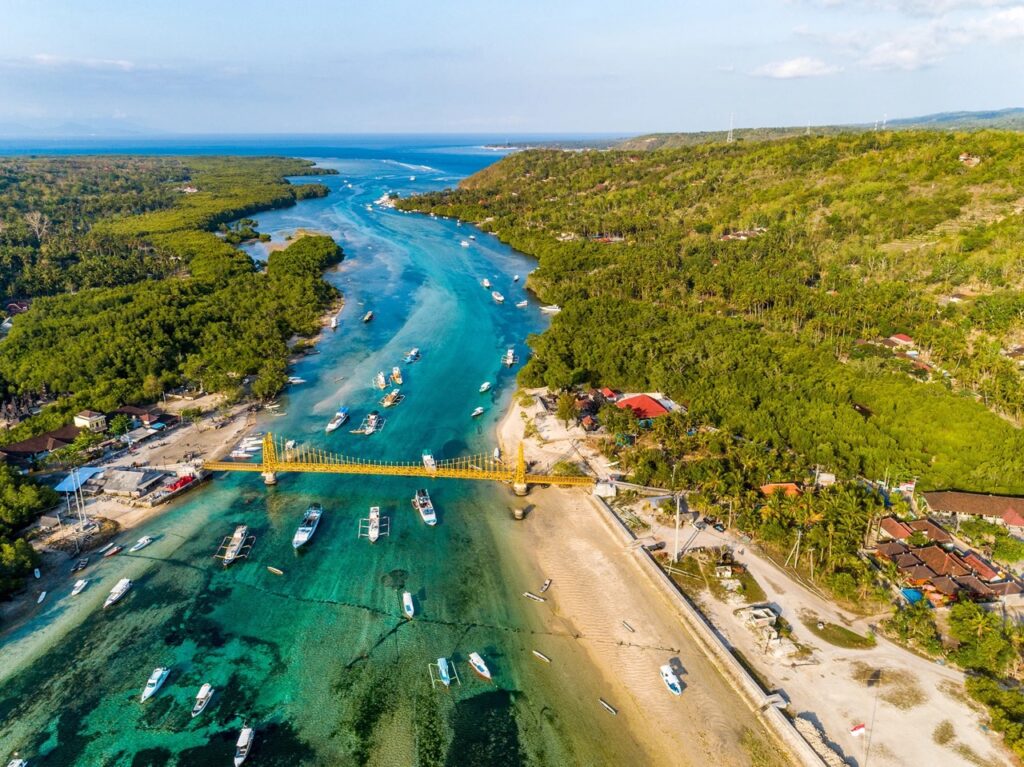
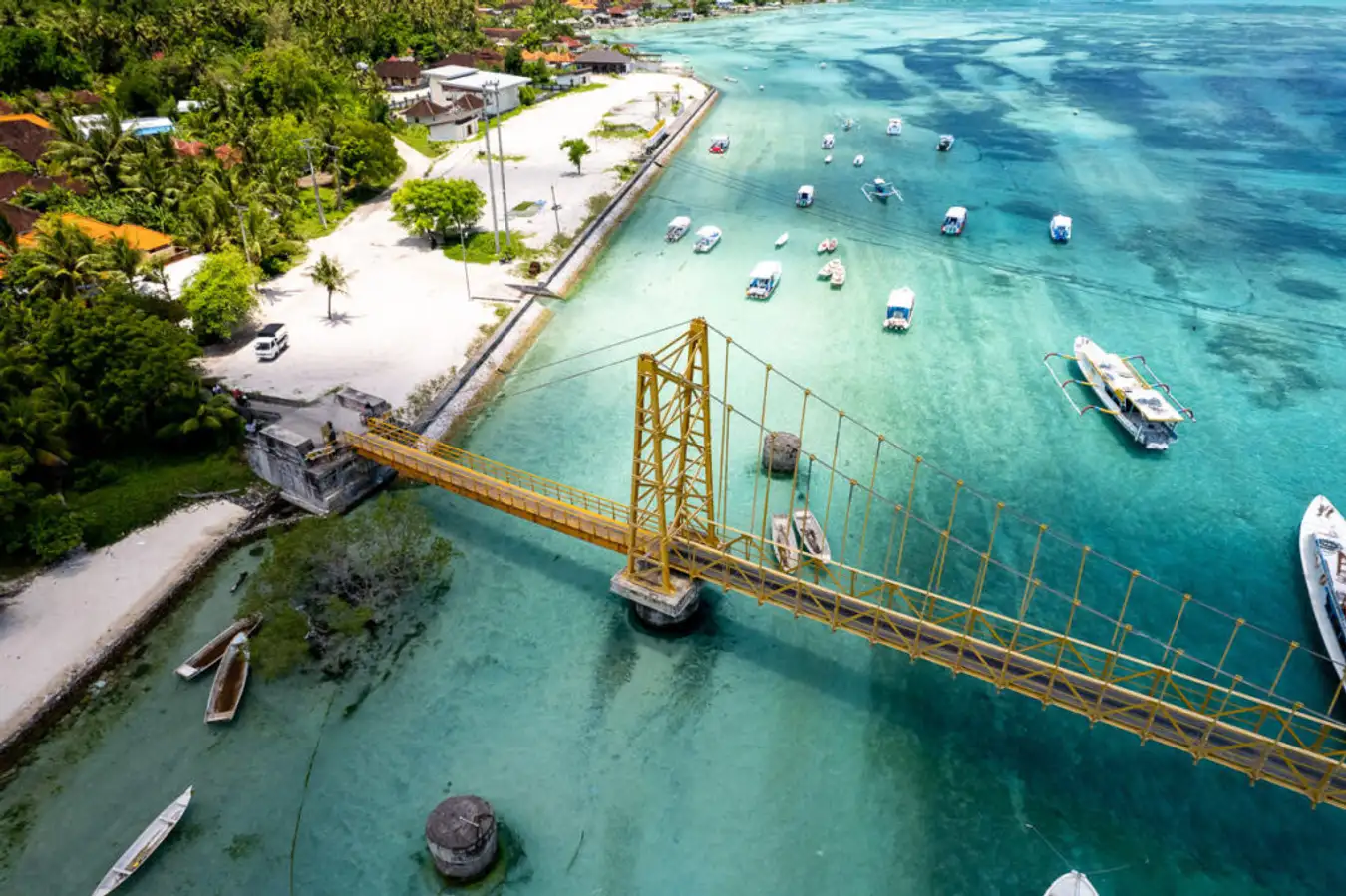
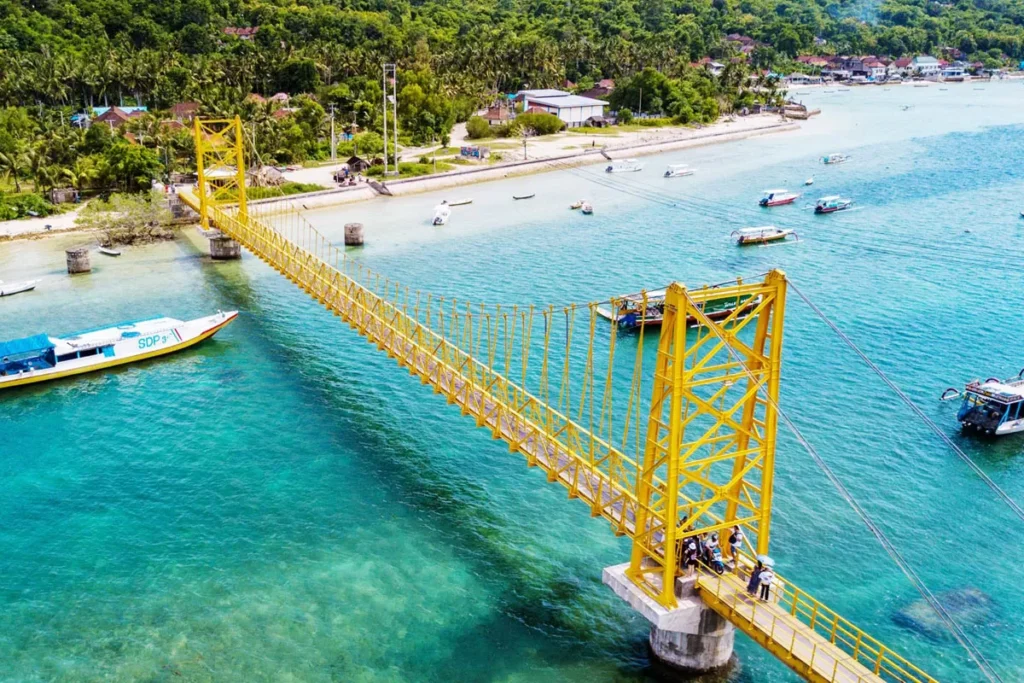
The Yellow Bridge is one of the most recognisable landmarks on Nusa Lembongan. Connecting the island with neighbouring Nusa Ceningan, this bright yellow suspension bridge is open to pedestrians and scooters, making it easy to explore both islands during your stay.
Originally built to improve connections between the two communities, the bridge has also become a popular photo spot and a symbol of the islands. We’ll cover some of the best things to see on Nusa Ceningan later in this guide.
Seaweed Farms
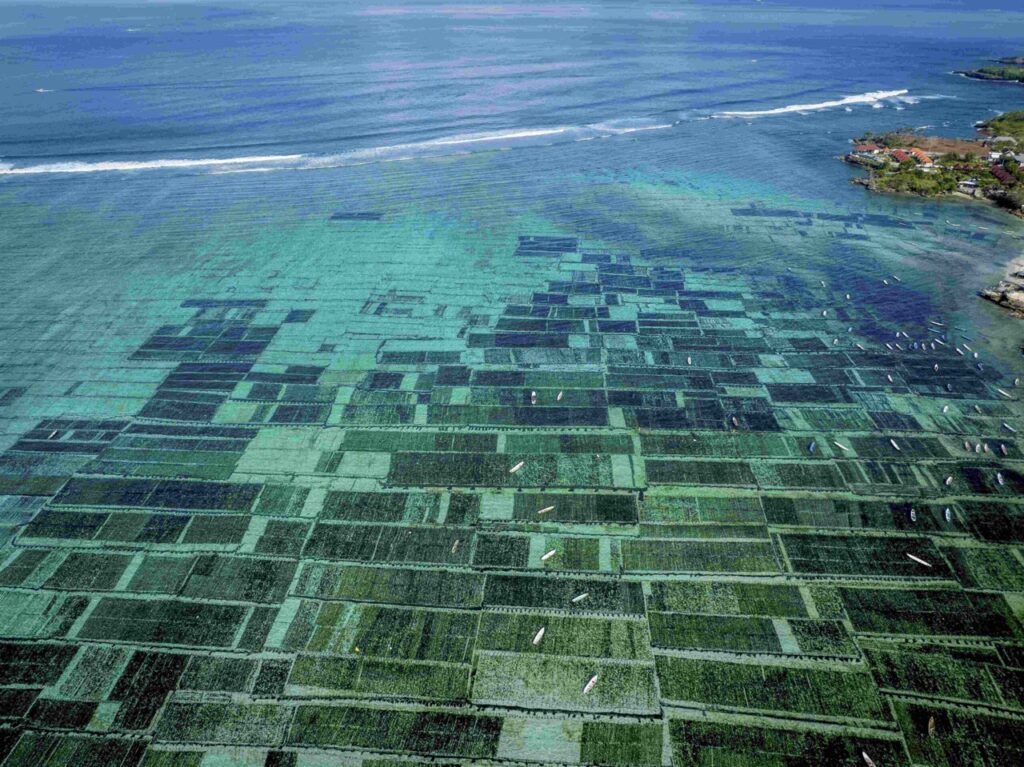
Long before tourism arrived, seaweed farming was one of Nusa Lembongan’s most important industries, and you’ll still see the farms around parts of the coastline today. During low tide, rows of seaweed can often be spotted drying in the sun or growing in the shallow waters offshore.
While tourism now plays a major role in the local economy, farming seaweed remains an important part of island life and offers a glimpse into Nusa Lembongan’s traditional way of life. It’s a side of the island that many visitors overlook.
Temples
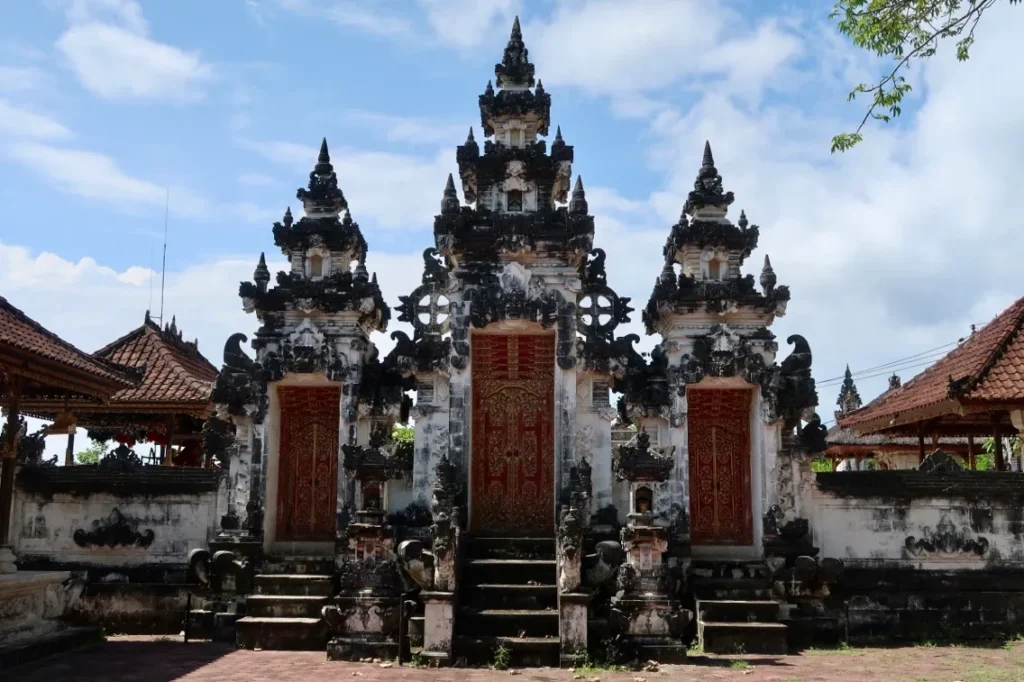
While Nusa Lembongan is best known for its coastline and water-based activities, there are also several temples dotted around the island. These offer a glimpse into local Balinese culture and are often found in scenic locations overlooking the ocean.
- Pura Puncak Sari – One of the island’s most important temples, known for its traditional Balinese architecture and peaceful setting.
- Pura Segara – A sea temple that reflects the close relationship between the island’s communities and the ocean that surrounds them.
- Pura Dalem Lembongan– An important local temple that plays a central role in ceremonies and religious festivals throughout the year.
Beaches
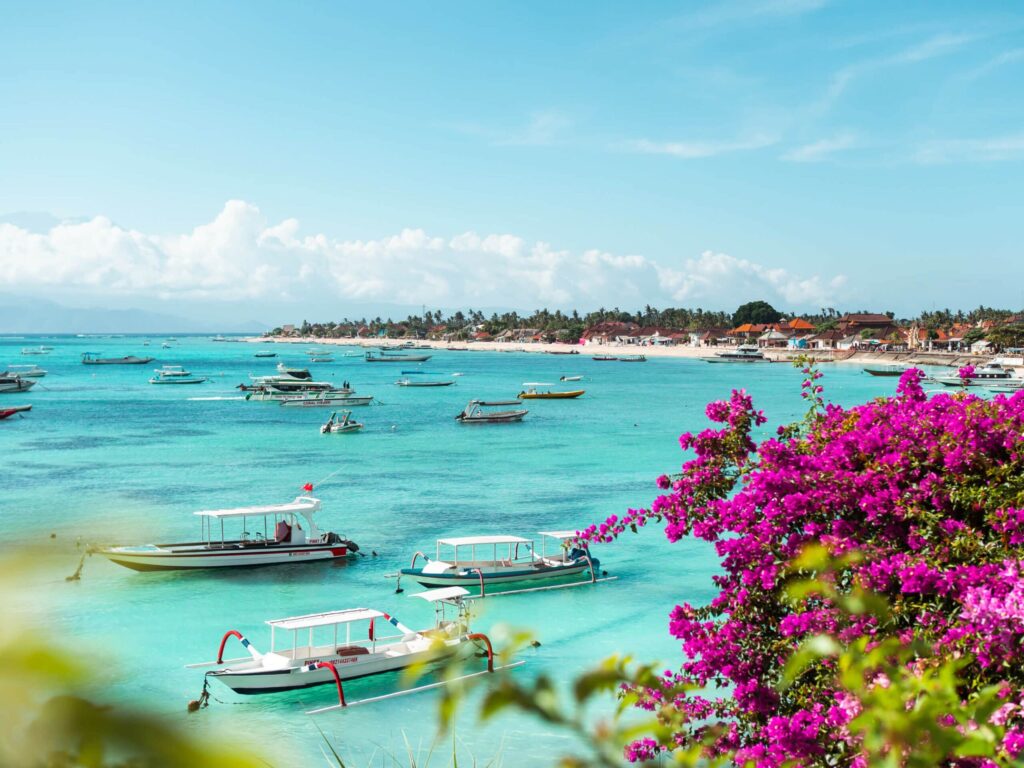
One of the biggest draws of Nusa Lembongan is its coastline. While Bali’s beaches are famous around the world, this island offers a quieter alternative, with everything from sheltered bays and family-friendly swimming spots to surf beaches and dramatic coastal scenery.
- Dream Beach – Dream Beach is one of the island’s most photographed stretches of sand. Surrounded by cliffs and turquoise water, it’s a popular place to relax, take in the views, and watch the crashing waves roll in from the Indian Ocean.


- Mushroom Bay – Also known as Mushroom Beach, this sheltered bay is one of the calmest and most popular spots on the island. Its gentle waters make it a favourite for swimming, while the beachfront is lined with cafes, restaurants, and small boats coming and going throughout the day.
- Jungut Batu Beach – Jungutbatu Beach is the longest beach on the island and serves as the main arrival point for most boats travelling from Bali. With plenty of accommodation, restaurants, and water activities nearby, it’s one of the busiest areas on Nusa Lembongan and a great place to watch daily life unfold along the shoreline.
- Tamarind Beach – Located between Jungut Batu and Mushroom Bay, Tamarind Beach is a quieter stretch of coastline that’s often overlooked by visitors. With fewer crowds and a relaxed atmosphere, it’s a great place to escape for a swim or simply enjoy the views across the water.
Beach Clubs
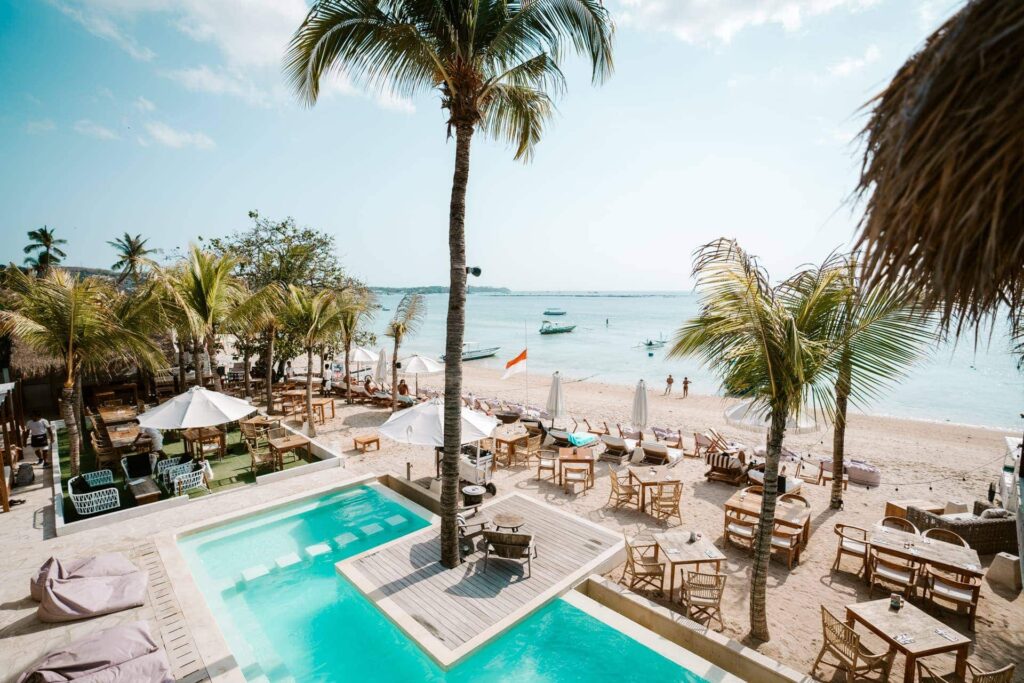
Nusa Lembongan isn’t the biggest and most developed island going, but there are still a handful of beach clubs where you can spend the afternoon chilling, enjoying a few drinks, and watching the sunset over the ocean. Don’t expect anything on the scale of mainland Bali’s biggest venues though, such as the epic FINNS Beach Club. The atmosphere here is far more laid-back, with a focus on ocean views, good food, and island lifestyle.
- Sandy Bay Beach Club – One of the island’s most popular beachfront venues, Sandy Bay Beach Club combines ocean views, a swimming pool, and a relaxed atmosphere overlooking the coastline near Devil’s Tear.
- Lembongan Beach Club – Located on Jungut Batu Beach, Lembongan Beach Club offers direct beach access, a pool area, and a restaurant serving food and drinks throughout the day.
- Ohanas Beach Club – Set on the waterfront at Jungut Batu, Ohanas is a popular spot for sunset drinks, casual dining, and spending an afternoon by the pool with views across the bay.
Things To See And Do Near Nusa Lembongan
While there’s plenty to keep you busy on Nusa Lembongan itself, some of the area’s most impressive attractions are found just beyond its shores. From the rugged coastline of Nusa Ceningan to the dramatic landscapes of Nusa Penida, it’s easy to explore more of the Nusa Islands during your stay.
Explore Nusa Ceningan
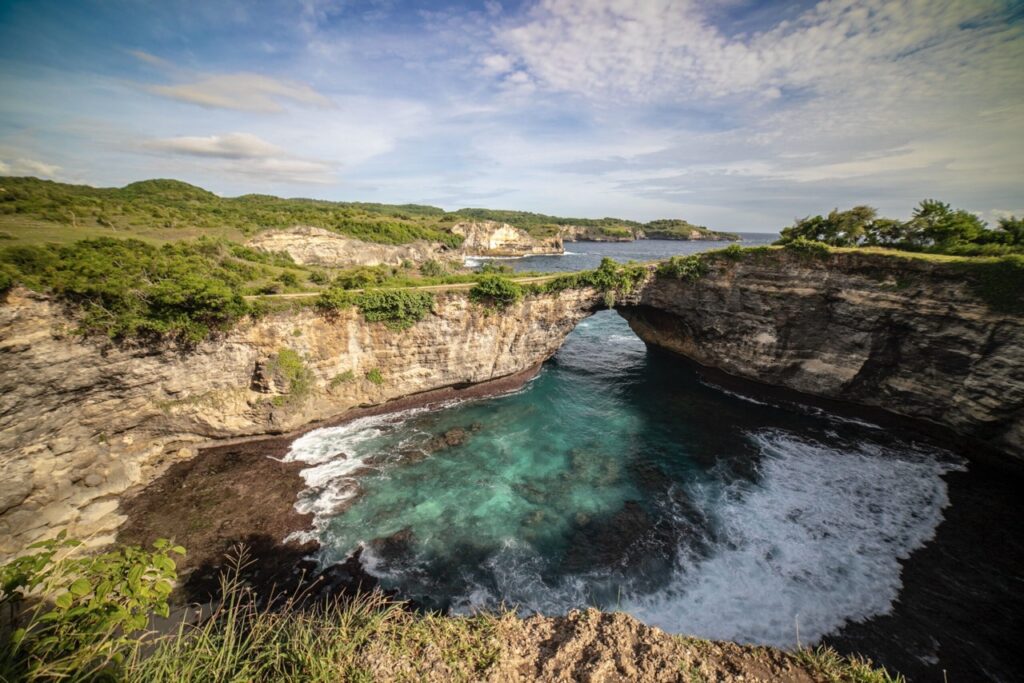
Connected to Nusa Lembongan by the Yellow Bridge, Nusa Ceningan is the smallest of the three Nusa Islands and well worth exploring during your stay. In reality, many visitors don’t even think of it as a separate destination, instead treating it as part of their Nusa Lembongan trip.
Despite its size, Nusa Ceningan is home to several attractions, including the dramatic Blue Lagoon viewpoint, the secluded Secret Beach, and a handful of cliffside cafes overlooking the ocean. The island is also known for its rugged coastline, quieter atmosphere, and scenic roads that wind between small villages and coastal viewpoints.
Whether you visit for an hour or spend half a day exploring, Nusa Ceningan gives you a different perspective of the islands and is easy to add to your itinerary.
Boat Trip To Nusa Penida
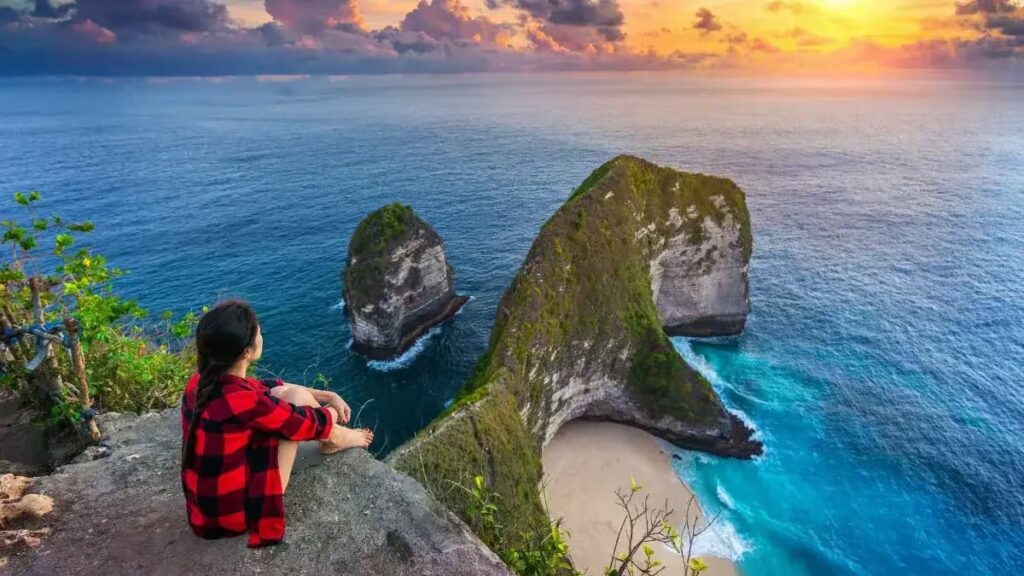
Nusa Penida is the largest of the three islands and one of Bali’s most popular day trip destinations. Regular boats make it easy to reach Nusa Penida from Nusa Lembongan, giving you access to dramatic viewpoints, rugged coastlines, cultural sites, and some of the most photographed landscapes in Indonesia.
- Peguyangan Waterfall – One of Nusa Penida’s most unique attractions, Peguyangan is reached via a steep staircase painted bright blue along the cliffside. The walk down is an attraction in itself, with spectacular coastal views along the way.
- Kelingking Beach – Arguably the most famous viewpoint on Nusa Penida, Kelingking Beach is known for its dramatic headland, which resembles the shape of a T-Rex dinosaur. It’s one of the most photographed locations in Indonesia.
- Angel’s Billabong – This natural infinity pool is carved into the rocky coastline and fills with crystal-clear seawater during calm conditions. It’s often visited alongside nearby Broken Beach.
- Manta Bay -Manta Bay is one of the best places around the Nusa Islands to spot manta rays in their natural habitat. Many snorkelling trips include a stop here, although sightings can never be guaranteed.
- Goa Giri Putri Cave Temple – Hidden inside a vast cave, Goa Giri Putri is one of the most unusual temples in Bali. Visitors enter through a narrow opening before emerging into a huge underground chamber used for worship.
- Crystal Bay – Known for its calm waters and palm-lined shoreline, Crystal Bay is one of Nusa Penida’s most popular beaches. It’s a favourite spot for swimming, snorkelling, and watching the sunset.
- Teletubbies Hill – Scenic hills named after the famous kids TV show, which it looks like a lot.
- Diamond Beach – Diamond Beach is famous for its white sand, towering cliffs, and turquoise water. The steep staircase leading down to the beach has become one of the island’s most recognisable photo spots.
- Broken Beach – One of Nusa Penida’s most distinctive natural landmarks, it features a circular cove connected to the ocean by a natural rock arch. The viewpoint above provides excellent views of the coastline below.
Where To Eat In Nusa Lembongan
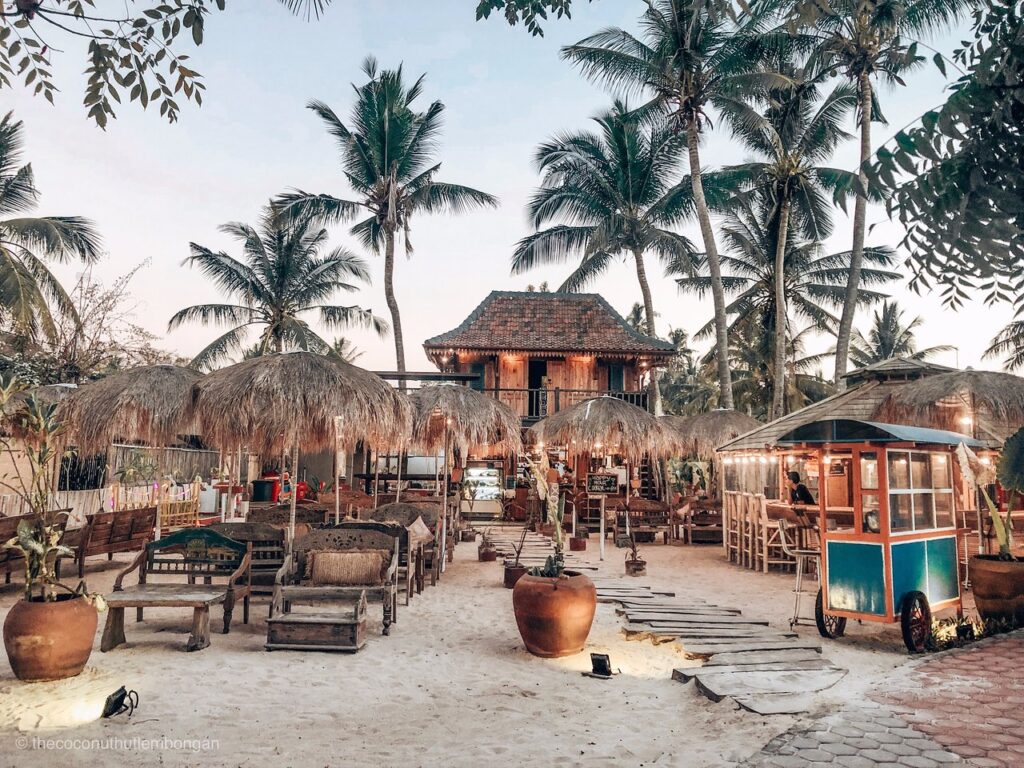
Despite its small size, Nusa Lembongan has a surprisingly good food scene. You’ll find everything from local warungs and beachfront cafes to beach bars and restaurants serving fresh seafood, Indonesian favourites, and international cuisine.
- Coconut Hut – Restaurant, beach bar, and mini golf course rolled into one. A fun place to spend an afternoon, with food, drinks, and ocean views all in one spot.


- Dapur Kecil Lembongan – One of the highest-rated restaurants on the island, right on Jungut Batu Beach. Serving everything from Indonesian favourites and Mexican dishes to smoothie bowls and vegan-friendly options.
- Hai Ri Zen – Asian, pasta, seafood and cocktails; the perfect mix for an evening meal in Mushroom Bay.
- Nick’s Place – A chilled-out BBQ spot on the hill. Serves burgers, fries, full racks of ribs, and great cocktails. Keep an eye out for the happy hour deals.
- Bali Eco Deli – Popular cafe serving healthy breakfasts, fresh coffee, sandwiches, smoothie bowls, and vegetarian-friendly options. A good choice for breakfast or lunch.
- Warung Pacific Lembongan – A stylish beachfront warung serving Japanese food and cocktails. It’s not all sushi here either; try the katsu burger!
Where To Stay In Nusa Lembongan
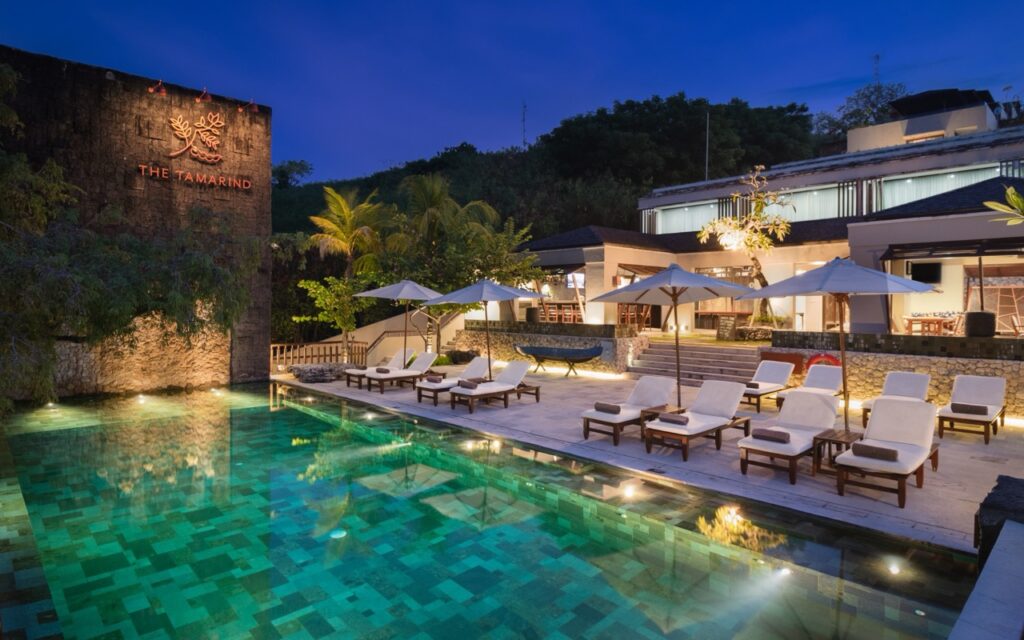
Whether you’re travelling on a budget or looking for something more luxurious, Nusa Lembongan offers accommodation to suit most styles of traveller. From simple guesthouses and boutique hotels to spacious villas overlooking the ocean, there are plenty of places to base yourself while exploring the island.
- The Tamarind Resort – Luxury hillside resort with ocean views, spacious villas, wellness facilities, and a stunning infinity pool.
- Batu Karang Resort – One of the island’s best-known resorts, perched above Jungut Batu with multiple pools, a spa, and panoramic sea views.
- Morin Resort – Modern boutique cliff-top hotel in Tamarind Bay, offering stylish rooms, sea views, an infinity pool, and a peaceful location.
- Dream Beach Cottages – Relaxed beachfront accommodation within walking distance of Dream Beach and Devil’s Tear.
- Honey Bee Huts – Affordable bungalow-style stay with a laid-back atmosphere and easy access to the island’s main attractions
- Lembongan Bagus Villa – Comfortable villa accommodation with a swimming pool and a convenient location for exploring Nusa Lembongan.
- Mahagiri Resort – Large beachfront resort on Jungut Batu Beach with direct beach access and a range of room options.
- The Shacks At Sandy Bay – Stylish beach shacks just up the hill, a few minutes from Sandy Bay. Some great views from up here, and a bit of a hidden gem.
FAQs
Is Nusa Lembongan Worth Going To?
Absolutely. Nusa Lembongan has amazing beaches, excellent snorkelling and diving, dramatic coastal scenery, and a much slower pace of life than Bali. Whether you’re visiting on a day trip or staying for a few nights, it’s one of the most rewarding island escapes in Bali.
Is Nusa Lembongan Expensive?
Nusa Lembongan is good for a range of budgets. While some boutique resorts and beachfront villas can be pricey, there are also affordable guesthouses, local warungs, and budget-friendly activities available across the island. In general, prices are similar to many popular areas of Bali.
How Long Is It From Bali To Nusa Lembongan

Most people get to Nusa Lembongan by fast boat from Sanur on Bali’s coast. The journey usually takes about 30 to 40 minutes, though travel times can vary with sea conditions and the operator.
What Is Nusa Lembongan Known For?
Nusa Lembongan is known for its beautiful beaches, crystal-clear waters, snorkelling, diving, surfing, and relaxed island atmosphere. It’s also famous for attractions such as Dream Beach, the bridge over to Nusa Ceningan, and Devil’s Tear.
Is Nusa Lembongan Near The Gili Islands?
Not particularly. While both are popular island destinations, the Gili Islands are located off the coast of Lombok, east of Bali. Nusa Lembongan sits much closer to the Bali mainland, around 30 minutes by boat from Sanur. Fast boat connections do exist between the two island groups, but most visitors explore them as separate destinations.
Can You Walk Around Nusa Lembongan?
In some areas, yes. Popular parts of the island such as Jungut Batu, Mushroom Bay, and Tamarind Bay are easy to explore on foot, with many beaches, restaurants, and hotels located close together. However, if you want to see more of the island, including attractions such as Devil’s Tear and the mangroves, you’ll probably want to use a bicycle, golf buggy, or private driver.
Final Thoughts On Nusa Lembongan, Bali
Whether you’re planning a day trip from Bali or looking for a few nights away from the mainland, Nusa Lembongan offers a completely different pace of life.
With beautiful beaches, excellent snorkelling and diving, dramatic coastal scenery, and easy access to Nusa Ceningan and Nusa Penida, it’s easy to see why so many visitors love Nusa Lembongan.
While Bali will always offer more attractions, restaurants, and nightlife, that’s not really the point. Nusa Lembongan is all about slowing down, enjoying the ocean, and experiencing a quieter side of island life.
If you’re looking for an island escape that combines natural beauty, adventure, and relaxation, Nusa Lembongan deserves a place on your Bali itinerary.