The Sacred Monkey Forest Sanctuary in Ubud is by far one of the most well-known and popular attractions in Bali, for forign and domestic tourists as well as the locals.
Set in the heart of Ubud, it’s more than just a place to see monkeys. It’s a unique mix of nature, culture, and spirituality, with ancient temples, dense forest, and of course, monkeys living freely throughout the grounds.
It’s a fun and easy place to visit, that doesn’t take too much planning, but we’ll run through the basics in this guide.
TL;DR, Summary Of Monkey Forest Bali
- Located in the heart of Ubud, the Sacred Monkey Forest Sanctuary is one of Bali’s most popular attractions.
- From the paths, to the trees, to the temples, there are monkeys everywhere; the clue’s in the name.
- Not just a tourist attraction, it’s also an active Hindu temple complex with spiritual importance to the local community.
- Most of the monkeys are used to humans and harmless, but they’re still wild animals, so it’s important to stay aware of them.
Where Is The Monkey Forest?
The Monkey Forest is located in the heart of Ubud, in central Bali, on the aptly named Monkey Forest Road. It’s easy to get and find from anywhere in Ubud, being one of the main attractions in the town.
Address: Jl. Monkey Forest, Ubud, Kecamatan Ubud, Kabupaten Gianyar, Bali 80571, Indonesia
Online: Monkey Forest Ubud
How To Get There:
How you get to the Monkey Forest depends on where you’re coming from, and what your further plans are. If you’re already staying in town, then it’s easy to get to. If you’re staying on the south west coast, for example, in Canggu or Seminyak, it’s close enough for a day trip.
- Ride Hailing App -If you’re already in town, then a ride-hailing app like Grab or Gojek is a cheap and easy option. You’ll have no difficulty getting there or back. If you’re coming from the coast, it will take at least an hour to get there, but most rides will be happy to take you. Getting back should be fine, or you could just stay in Ubud for a few nights.
- Private Car and Driver – Hiring a private car and driver is a great way to visit, whether you’re staying near or far. You can make a day trip out of it, visiting several locations, you’ll have someone to watch over your stuff, and you’ll have no issues getting home at the end of the day. Ask your hotel or guesthouse for a reputable driver.
- Group Tour – Group tours are a great way to see the Monkey Forest along with a few other locations. The itinerary is already chosen, and lunch is usually included, so no planning is required. If you’re a solo traveller and want to meet new people, this is a great option; the only thing it lacks is freedom and flexibility.
- Walk or Cycle – If you’re staying in the centre of Ubud, why not walk or cycle? Many hotels have bicycles to rent, and whether on foot or two wheels, you could tie your day out in with something like the nearby Campuhan Ridge Walk. Just be sure to keep hydrated, and take a break if you’re feeling puffed out.


- Motorcycle or Scooter Hire – Hiring a motorbike or scooter always sounds like a great idea, freedom, excitement, the wind rushing through your hair as you explore the hills. It also comes with certain risks to consider, however. First off, it’s unlikely that you’ll have the correct license and be covered by insurance. Secondly, the roads in Bali can be extremely testing and often dangerous. Accidents happen, don’t be that guy!
Is There An Entrance Fee To The Monkey Forest?
There is an entrance fee for the Monkey Forest. For international visitors, the price is 100,000 IFDR for children and 130,000 IDR for adults.
Tickets can be bought online in advance or at the entrance. It can get quite busy in peak times, but it’s unlikely to be that busy that you’ll be refused a ticket at the door.
When Is The Best Time To Visit The Monkey Forest?
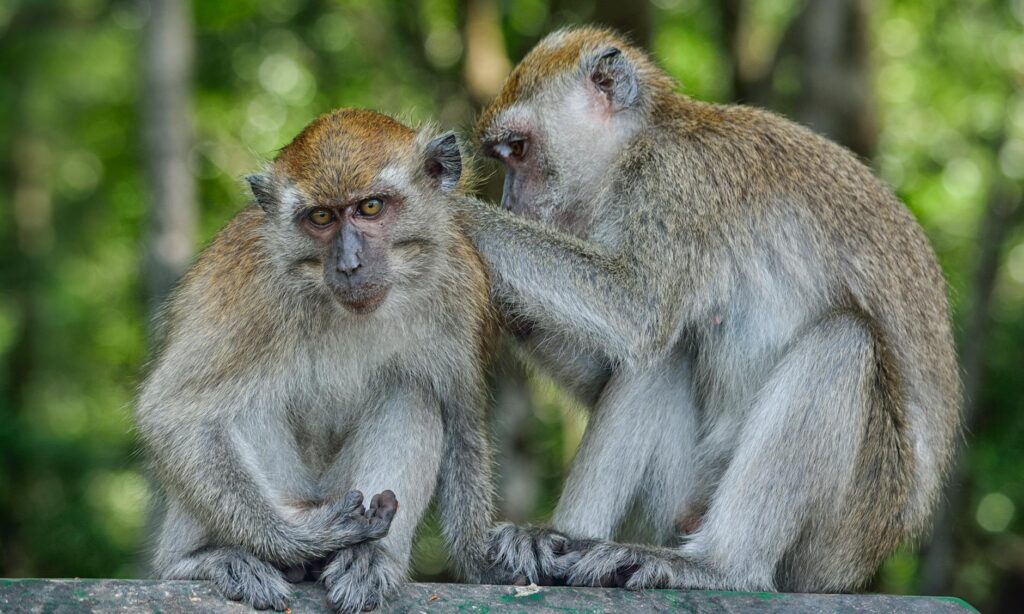
The best times to visit the Ubud Monkey Forest are either early morning or in the afternoon; this way, you’ll miss both the midday crowds and the midday heat. Having said that, there’s plenty of shade from the trees.
Like all outdoor activities, you have less of a sudden downpout during the dry season, though you’ll have more space to yourself as it’s quieter in the wet season.
It’s worth noting that the opening hours are 9 am to 6 pm, but the last entrance time is 5 pm.
What To Expect At The Sacred Monkey Forest Sanctuary
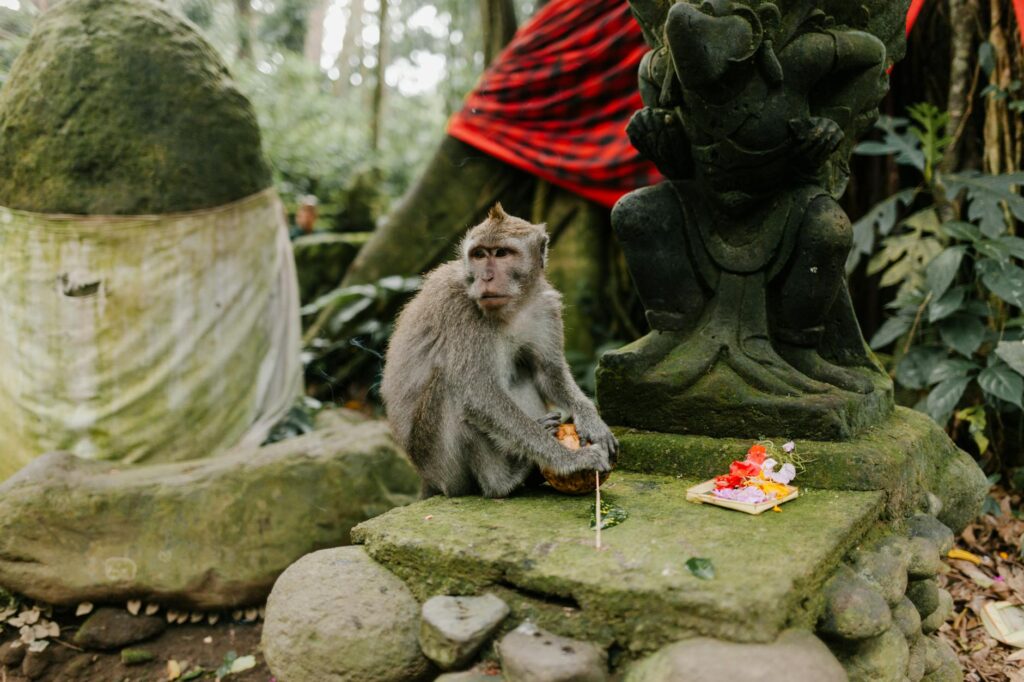
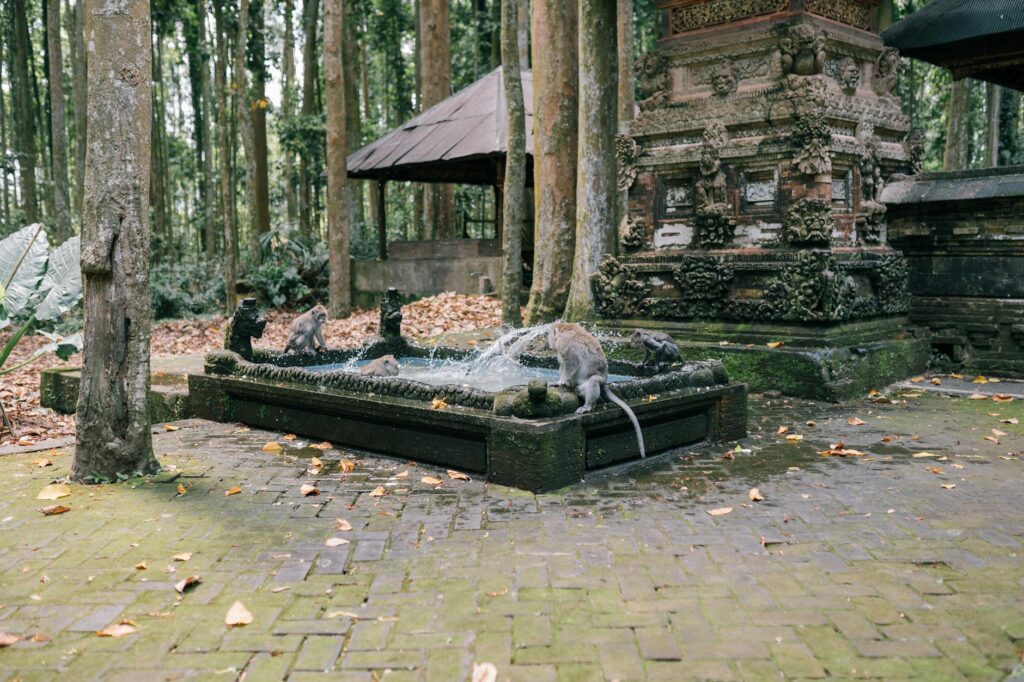
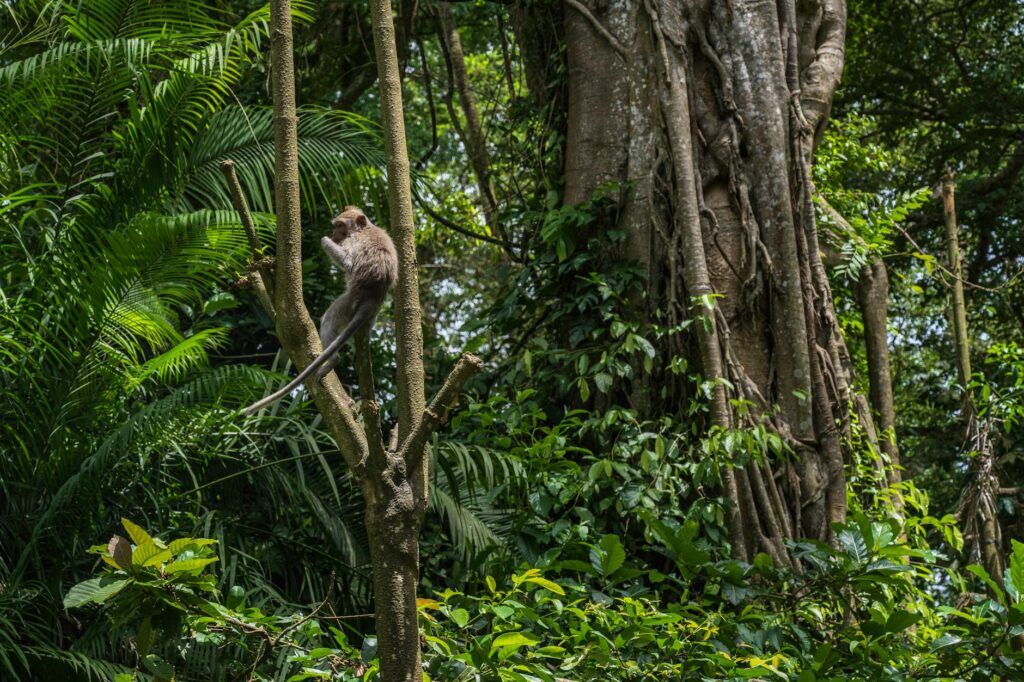
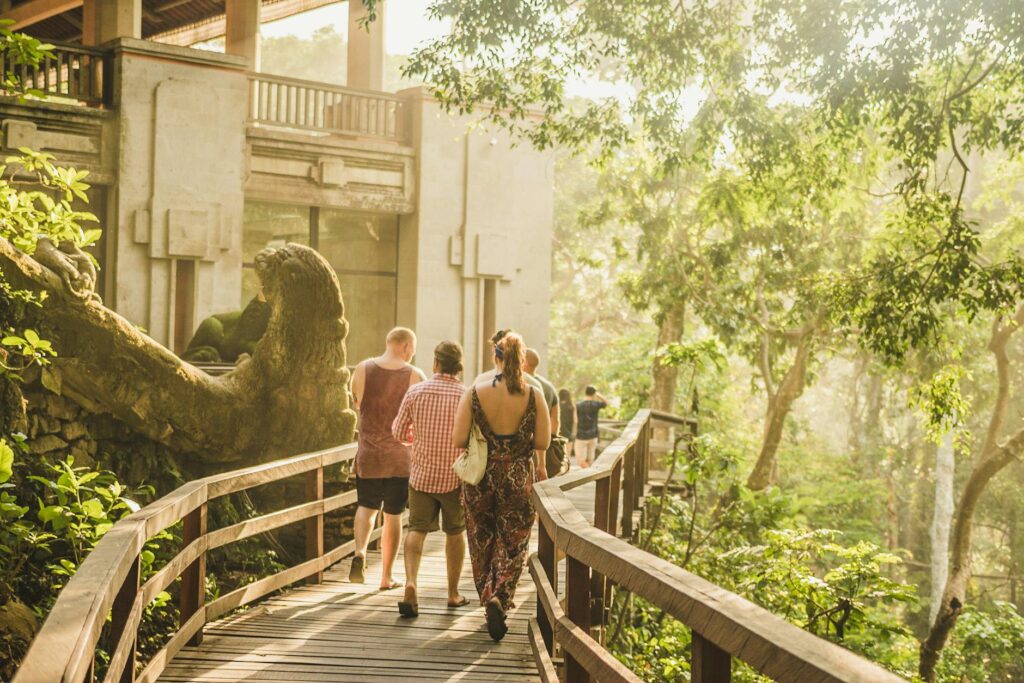
Once you enter the Monkey Forest, you’ll find yourself walking through thick forest paths, old stone walkways, and temple grounds, with monkeys pretty much everywhere you look. Some completely ignore people, others sit on railings watching visitors go by, while a few are always on the lookout for food or unattended bags.
Despite how popular it is, the forest still has a fairly calm atmosphere to it, helped by the dense trees, shade, flowing water, and the sound of nature around you. It feels very different from the busier streets outside.
The Ubud Monkey Forest is more than just a tourist attraction, though, especially to the immediate locals. The nearby village’s residents view it as both an important spiritual location and a conservation centre.
It’s also a place of active worship, which becomes more apparent when you see the temples there.
Hindu Temples
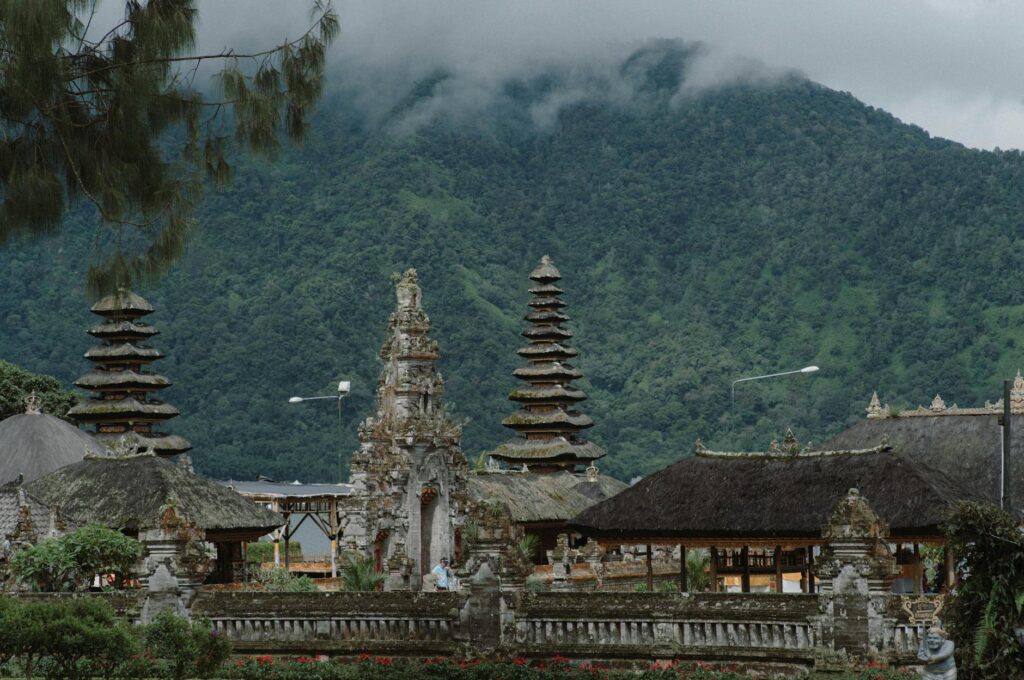
The Monkey Forest isn’t just a park or tourist attraction; it’s also an active temple complex with an important role in the local Hindu community.
While most people come for the monkeys, the temples are a huge part of what gives the forest its atmosphere and cultural significance.


There are three temples within the sanctuary, and, as with all sacred sites, visitors are expected to behave respectfully around them.
- Dalem Agung Padangtegal Temple – The main temple within the Monkey Forest complex. Surrounded by dense forest and statues, it’s one of the most striking parts of the sanctuary and plays an important role in local religious life. Dedicated to Lord Shiva.
- Prajapati Temple – Connected to funeral and cremation ceremonies, and is located near the traditional cemetery area in the forest. Like the other temples in the sanctuary, it remains an active spiritual location rather than just a historic site. Dedicated to Prajabati, a cremation god.
- Beji Temple – Associated with purification and spiritual and physical cleansing. Located near a flowing water area within the forest, it has a calmer atmosphere compared to some of the busier parts of the sanctuary. Dedicated to the goddess Gangga.
About The Monkeys
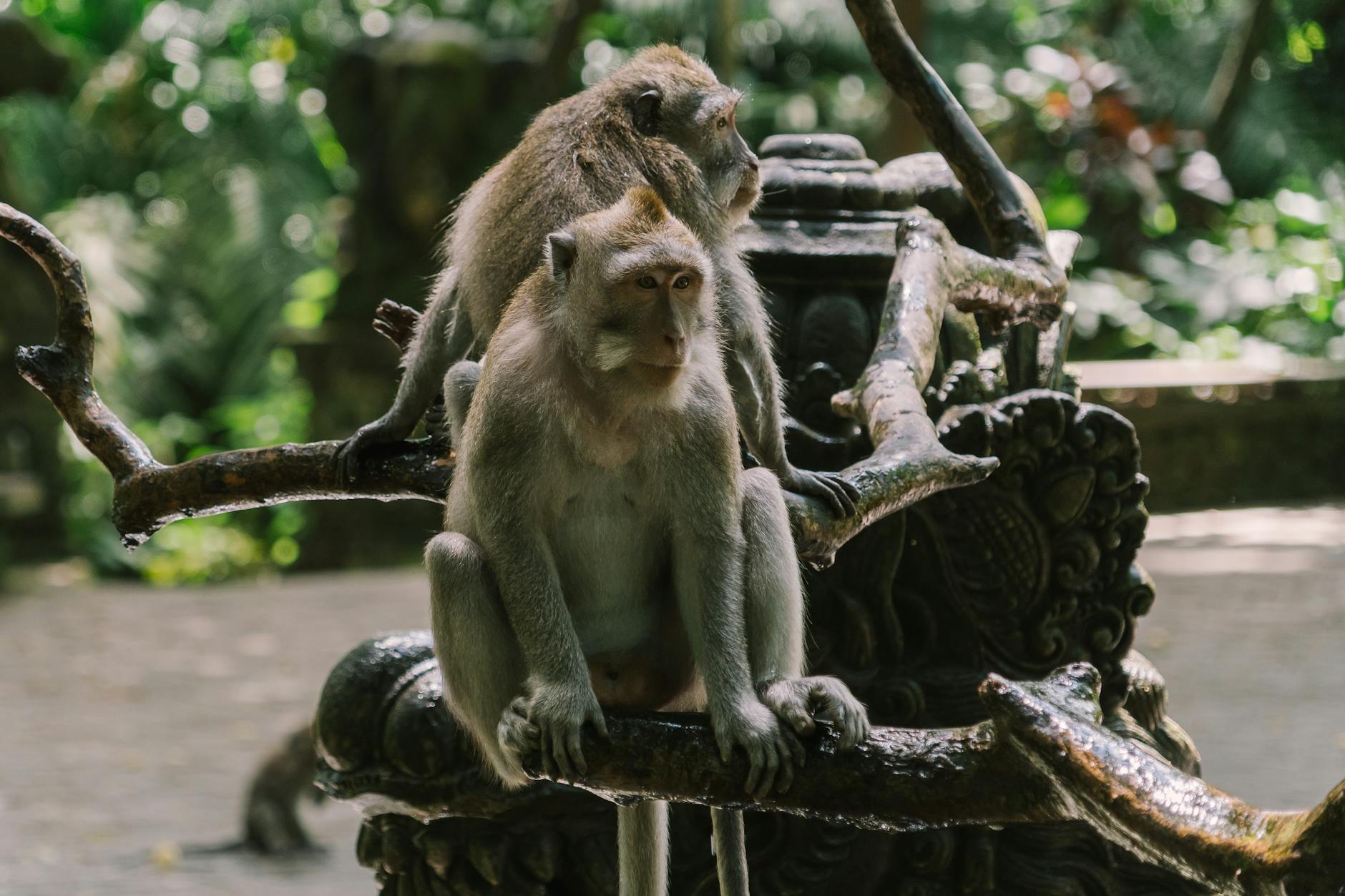
The species of monkey living in the sanctuary is the long-tailed macaque, also known as crab-eating macaques or by their scientific name, Macaca Fascicularis. They’re highly intelligent and social animals, and are very used to being around humans.
Most of the monkeys won’t bother visitors at all, and many simply go about their day climbing trees, grooming each other, exploring the forest, or relaxing around the temple grounds.
Having said that, monkeys in Bali are well known for their cheeky behaviour, especially when food is involved.
Baby Monkeys
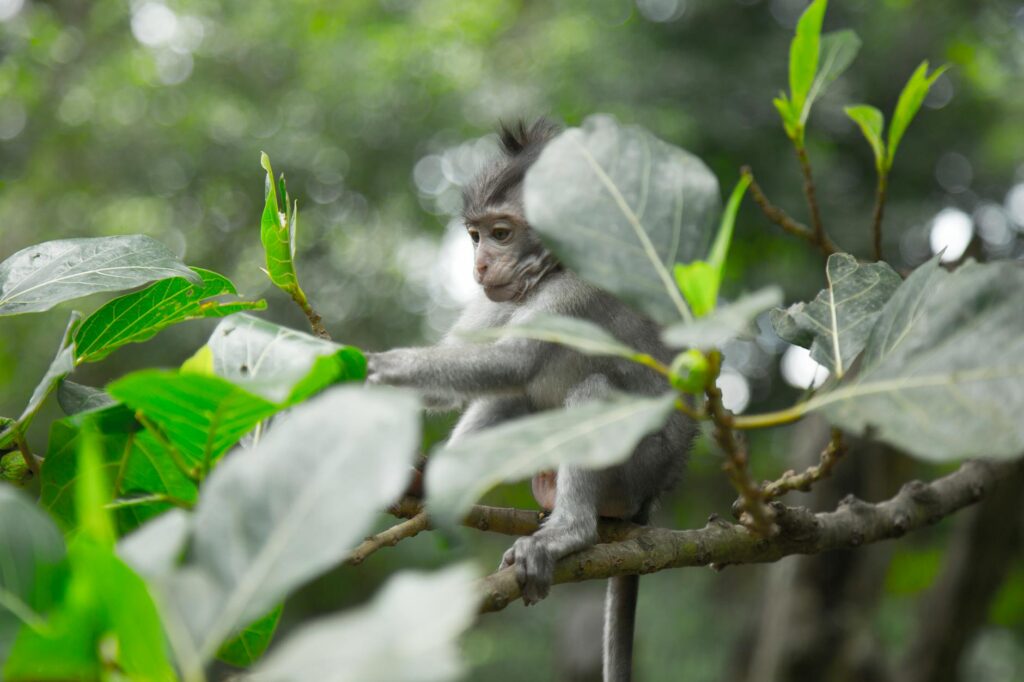
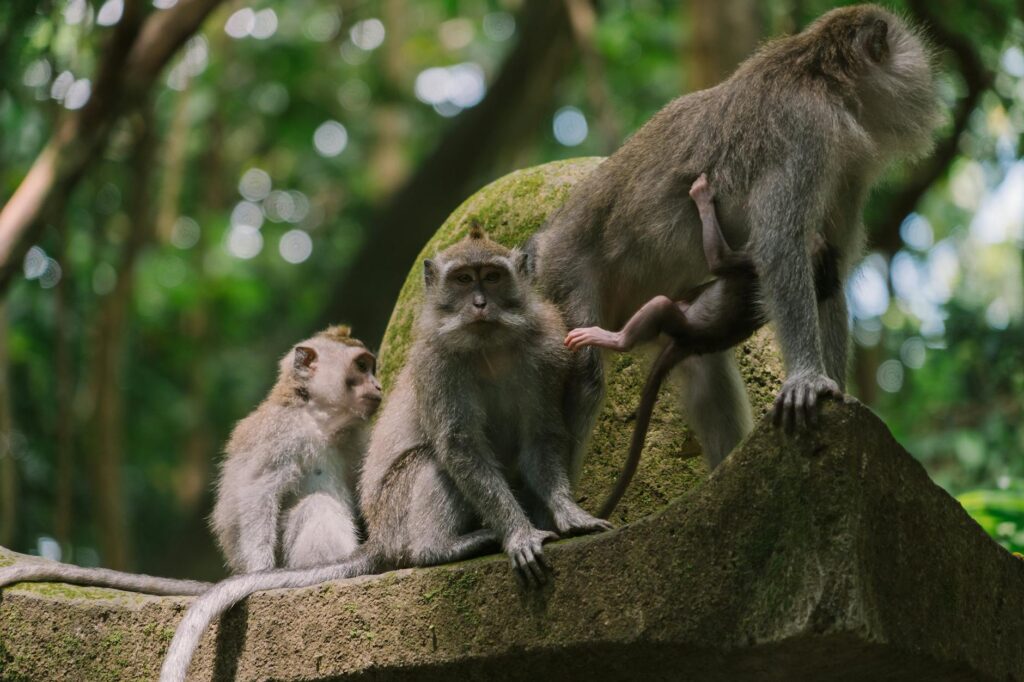
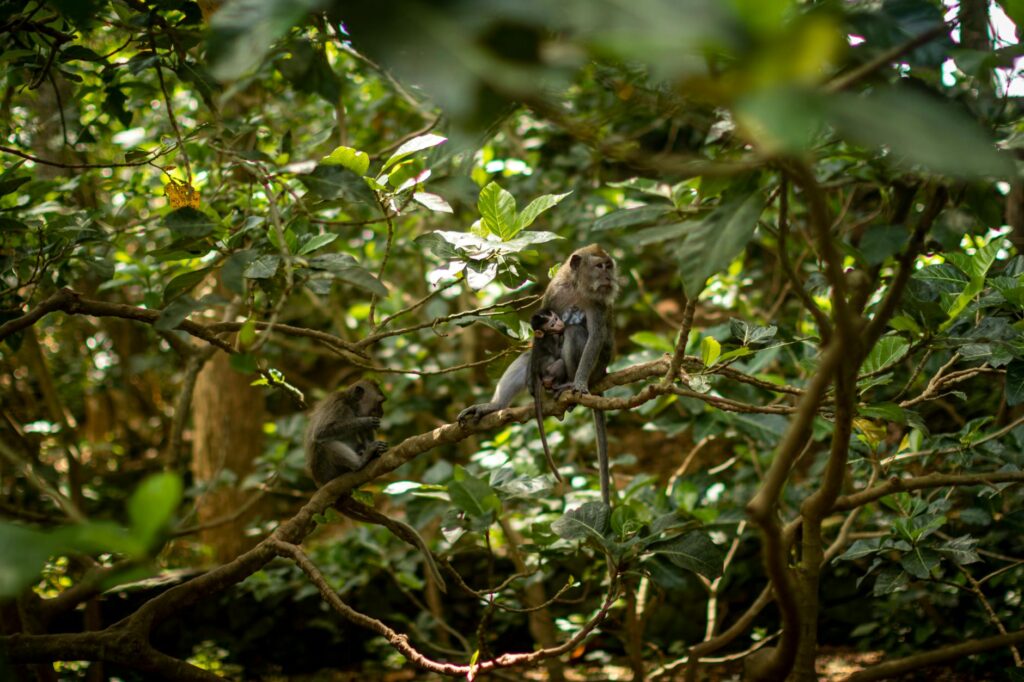
One thing visitors almost always notice is the baby monkeys clinging to their mothers as they move through the forest.
They’re naturally curious and playful, often climbing, jumping, exploring, and interacting with each other while the adults keep a close eye on them.
They might look cute, but it’s important to remember they’re still wild animals, and the mothers can become protective if they feel their child is being bothered.
Safety Around The Monkeys
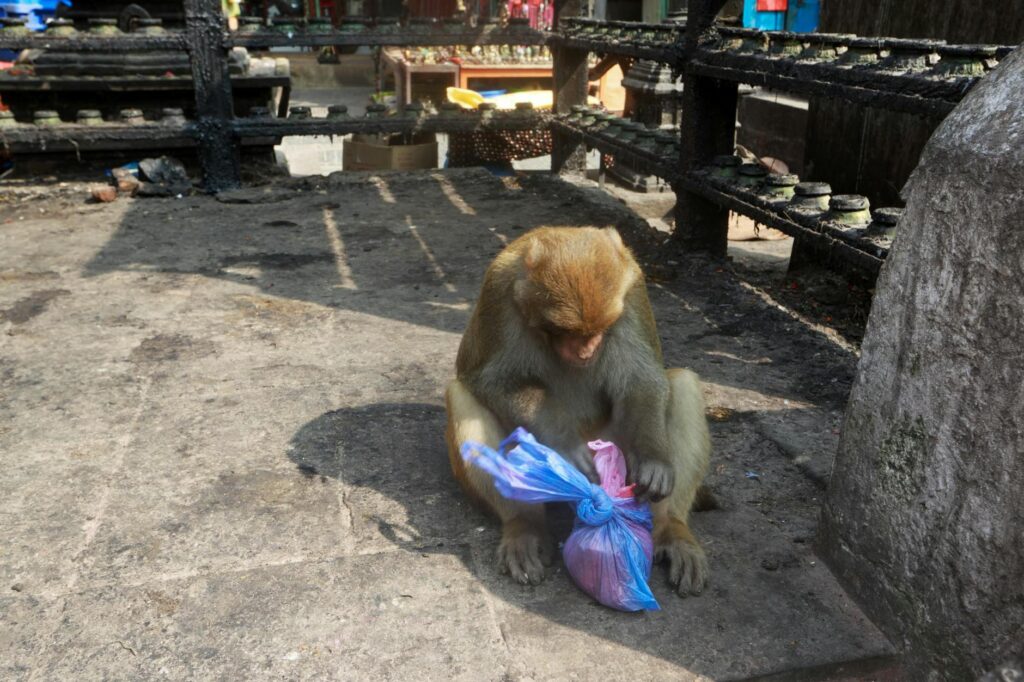
Although most interactions are harmless, it’s important to remember the monkeys are still wild animals. They’re extremely used to humans, but they can become aggressive or angry if they think food is involved, or if they feel threatened.
The monkeys are known for stealing things like glasses, hats, drinks, fruit and anything visible sticking out of bags or pockets, even the coffee from your hand if you’re not careful. Some will climb onto visitors or sit on people’s heads for photos, which can be fun, but just stay aware and avoid sudden reactions.
You shouldn’t feed the monkeys; it only encourages them. You shouldn’t fear them, just respect them. If one grabs something from you, don’t try to fight or pull it back aggressively; find a member of staff who is used to dealing with these situations.
Food is sometimes used as a way to distract the monkey or even as a bargaining chip, but again, it’s best to leave this to staff unless you’re used to working with wild primates, which is unlikely.
Important: if you are bitten or scratched, seek medical advice immediately.
FAQs
Is The Monkey Forest A Natural Environment?
It’s a mix. The forest itself is natural, with dense trees and wildlife, but the area is managed as a sanctuary and conservation centre. The temples and pathways are maintained, so while it feels natural, it’s not completely untouched.
Final Thoughts On The Monkey Forest Ubud
The Monkey Forest is one of the more unique spots in Ubud.
It’s not just monkeys, you’ve got temples, thick forest, and everything all packed into one place. It’s one of the most popular attractions in the area, and once you’re there, it’s easy to see why.