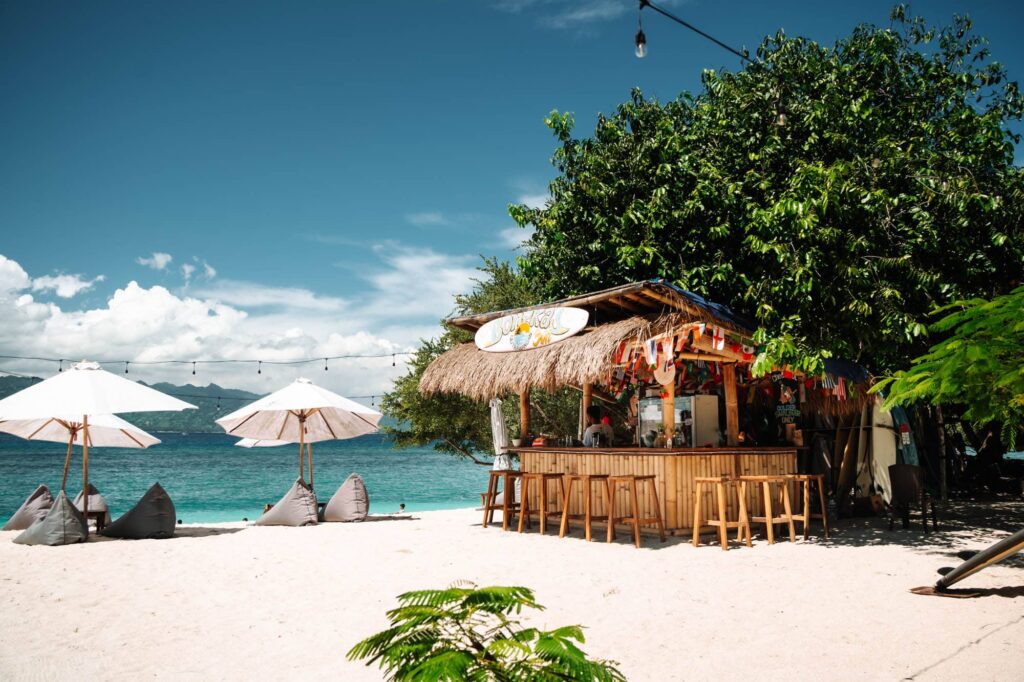
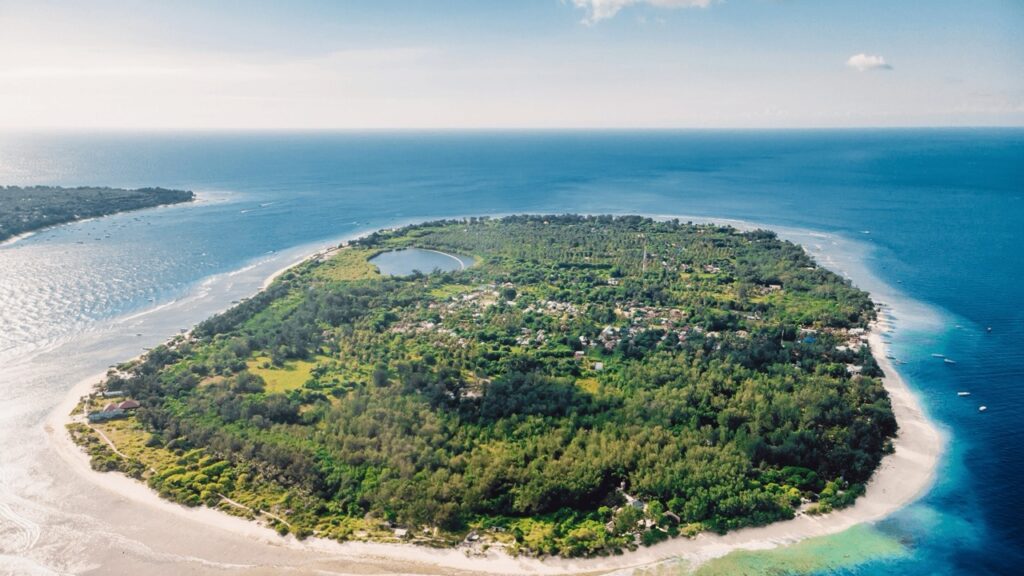
The Gili Islands are one of the most popular island escapes near Bali, known for their white sand beaches, clear water, sea turtles, and laid-back atmosphere.
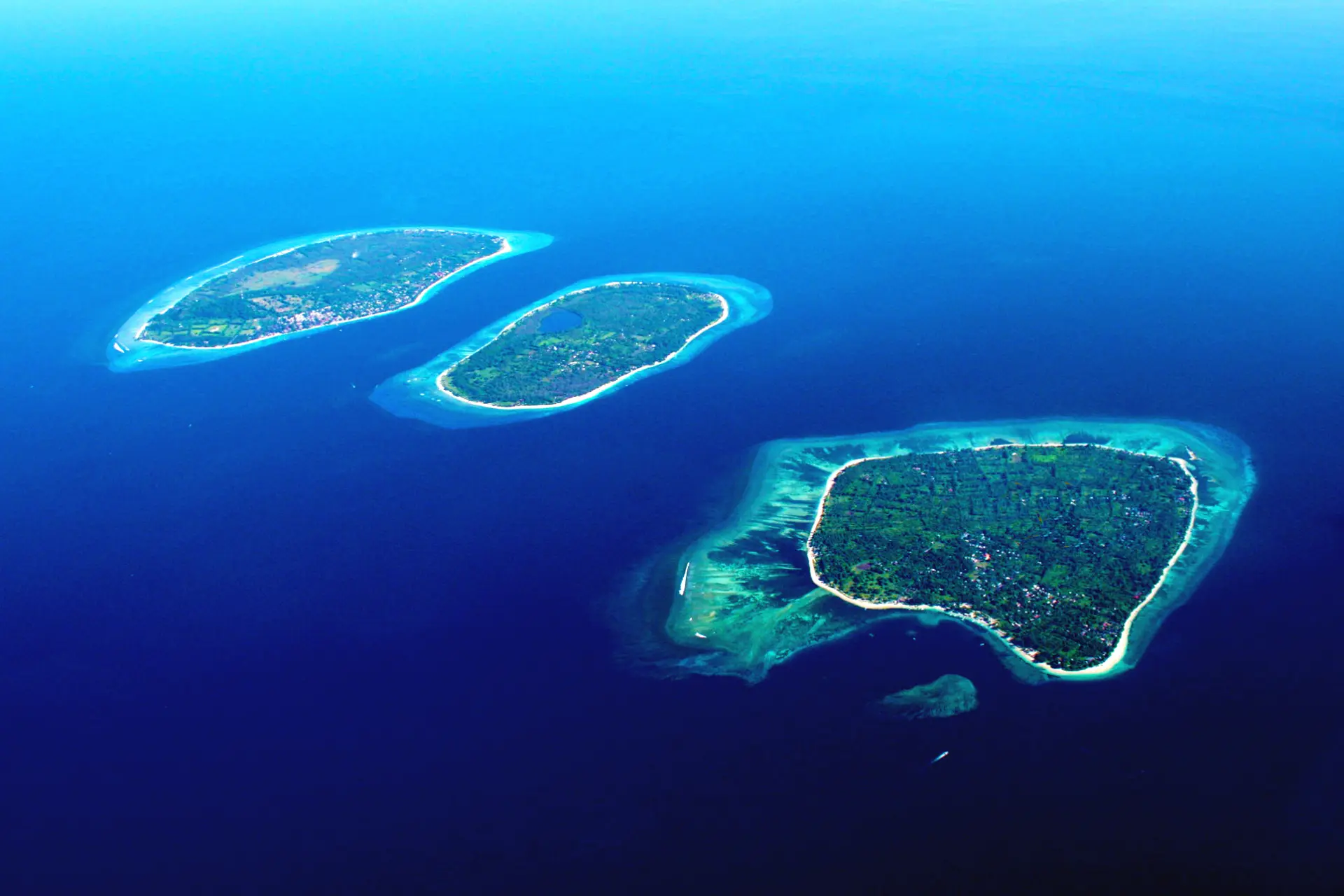
Located just off the north west coast of Lombok, the three Gili Islands each have their own personality, from the nightlife of Gili Trawangan to the quieter pace of Gili Air and Gili Meno.
Whether you’re planning to dive, snorkel, relax on the beach, or just escape Bali for a few days, we’ll run through the basics in this guide.
TL;DR, Summary Of The Gili Islands
- The Gili Islands are three small islands off the coast of Lombok, known for beaches, diving, turtles, and laid-back island life.
- Gili Trawangan is the busiest and most famous for nightlife, while Gili Meno is quieter, and Gili Air sits somewhere in the middle.
- One of the things that makes the Gilis stand out is the lack of motor vehicles, with most people getting around on foot, bicycle, horse, or cart.
- Island hopping is easy, with short boat journeys connecting the islands as well as Lombok and Bali.
What Are The Gili Islands?
Gili literally means “small island” in the local Sasak Language, and that’s exactly what they are!
More specifically, the Gili Islands are an archipelago of three small islands off the northwest coast of Lombok, the large island to the east of Bali. They’re part of the province of the Lesser Sunda Islands, which doesn’t include Bali, and more specifically, the North Lombok Regency.
Jutting out into the Lombok Strait from a small peninsula called Sire, the three islands are Gili Trawangan, Gili Meno, and Gili Air, all connected by short boat rides and close enough together for island hopping.
Despite being small islands, each has its own local population – just over 5000 permanent residents spread across the islands – with accommodation, restaurants, dive shops, and beach bars.
One of the things that makes the islands stand out is the lack of motorised vehicles, with most people getting around by foot, bicycle, or horse and cart.
How to Get To The Gili Islands
The most popular and efficient way to get to the Gili Islands is by fast boat from Bali.
Most travellers heading over from neighbouring Bali leave from ports on the south or east side of the island, with the exact departure point usually depending on where they’re staying.
The three main Bali departure ports are:
- Padang Bai – The quickest and most common route, especially for people staying in Ubud or east Bali.
- Sanur – Popular with travellers staying in places like Kuta, Seminyak, or Sanur itself.
- Serangan – A smaller departure point closer to the airport and the south Bali areas.
Depending on sea conditions and departure point, the boat ride can take anywhere between 1.5 and 4 hours. Many fast boat services include hotel pickup by shuttle or private car, making the overall journey fairly straightforward.
There are also boat options from Lombok, if you’re coming from that side, either after some exploring or from Lombok Airport. The local boat ride from Bangsal Harbour to Gili Air can take as little as 5 minutes with the right conditions!
One thing worth mentioning is that the Lombok Strait can get rough at times, especially during bad weather, so seasickness can be an issue for some travellers.


Culture Of The Gili Islands
Although heavily connected to Bali through tourism, the culture and way of life of the Gili Islands are actually much closer to that of Lombok. The local population is mostly Sasak, the indigenous people of Lombok, with Bahasa Indonesia and the Sasak language both commonly spoken across the islands, and Islam being the main religion.
Away from the bars and dive centres, life on the islands is still centred around small local communities, fishing, religion, and family life. Mosques play an important role in daily life, and despite the constant flow of travellers coming and going, there’s still a strong sense that people actually live here, rather than the islands existing purely for tourism.
Tourism has had a huge influence on the Gili Islands over the years, shaping everything from the nightlife of Gili Trawangan to the cafes, accommodation, and diving industry found across all three of the islands. Even so, the Gilis still hold on to their old ways, a relaxed and localised island vibe.
The first thing most people will notice is the lack of motorised transport, with most people getting around on foot, save for a few bicycles and horse-drawn carts, and of course, small boats hopping between the islands for either transport or trade. In more recent years, electric scooters have also popped up. If you decide to hire one, just be careful, they’re not really made for the unstable ground!
Breakdown Of The Three Gili Islands
Although the Gilis are located very close together, each has its own personality and atmosphere.
Travelling between them only takes a short boat ride, making island hopping easy, but the difference in pace between them can feel surprisingly noticeable.
Some travellers stay on one island for their whole trip, while others explore all three. Which island suits you best usually comes down to what sort of trip you’re looking for.
Gili Trawangan
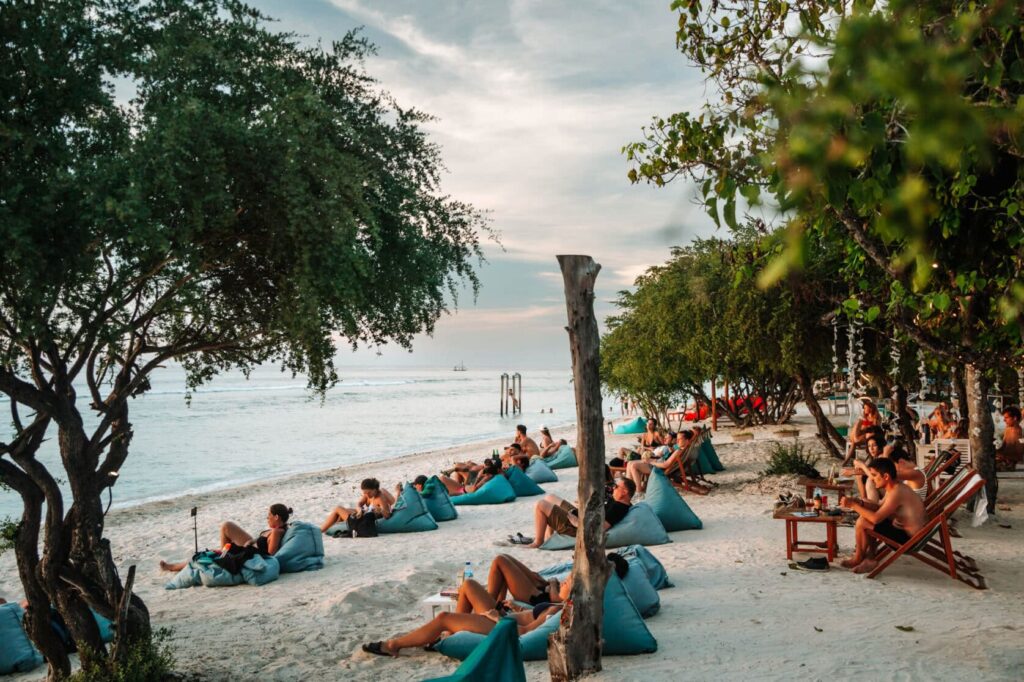
Gili Trawangan, often shortened to Gili T, is the largest and busiest of Lombok’s Gili Islands. It’s best known for its nightlife, beach bars, live music, and social atmosphere, making it especially popular with backpackers and younger travellers.
That said, there’s more to Gili T than partying. The island also has some of the best diving infrastructure in the Gilis, along with beautiful beaches, snorkelling tours, and plenty of places to relax away from the busier areas. The west side of the island is especially popular for sunsets.
Gili Meno
Gili Meno is the quietest and least developed of the three islands, known for its slower pace and smaller local feel. It’s often popular with couples, honeymooners, or travellers simply looking to switch off for a few days.
Despite being the smallest of the Gili Islands, there’s still plenty to do, including snorkelling, diving, and visiting the turtle sanctuary or Gili Meno Bird Park. The beaches here are usually quieter too, especially compared to Gili Trawangan.
Gili Air
Gili Air is the easternmost of the islands, but vibes-wise, it sits somewhere in the middle between the other two islands. It has more going on than Gili Meno, but feels noticeably calmer and less party-focused than Gili Trawangan.
Many travellers see Gili Air as the most balanced of the islands, with bars, cafes, dive shops, and music, while still keeping a relaxed atmosphere.
It’s a popular choice for longer stays, especially for people who want a social vibe without the heavier nightlife scene of Gili T.


What To Do On The Gili Islands
Although the islands are small, there’s actually quite a lot to do once you’re there, whether that means diving, snorkelling, beach hopping, partying, or simply slowing down for a few days. Some activities are better suited to certain islands than others, so where you stay can shape your trip a bit.
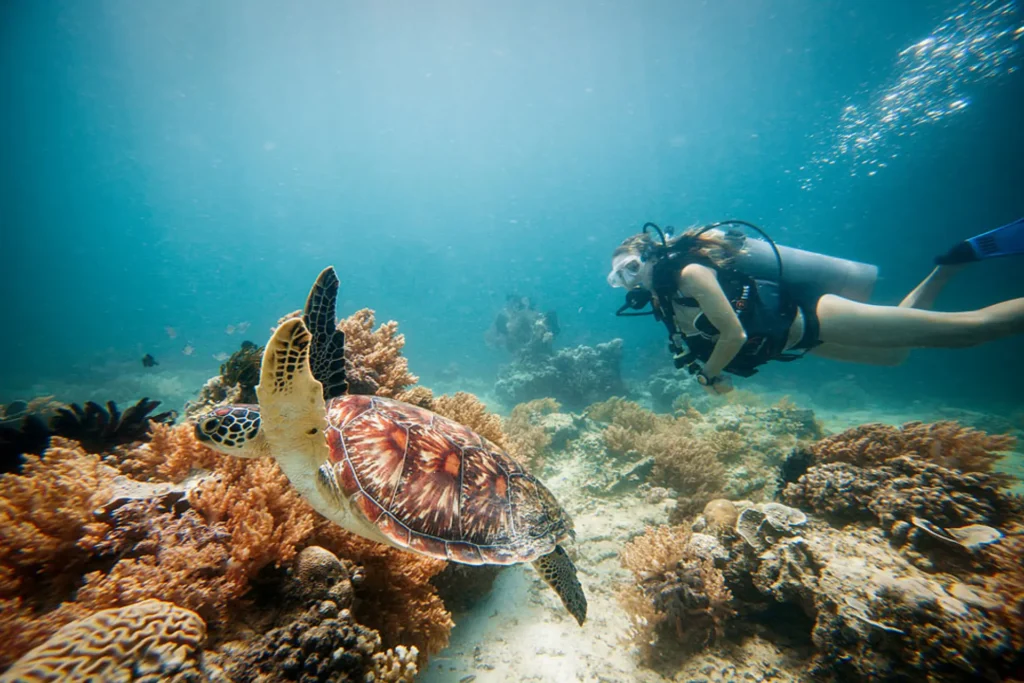
- Scuba Diving – The Gili Islands are one of the most popular diving destinations in Indonesia, with dive sites suitable for both beginners and experienced divers. The islands are surrounded by coral reefs and sea life, with dive shops and dive operators found across all three of the islands, especially on Gili Trawangan and Gili Air. More about the surrounding sea in the next section!
- Turtle Sanctuaries – A few turtle sanctuary projects around, helping protect and raise baby turtles before releasing them into the sea. They’re small places, but can still be interesting to visit, especially if you’re travelling with a child or simply interested in turtles.
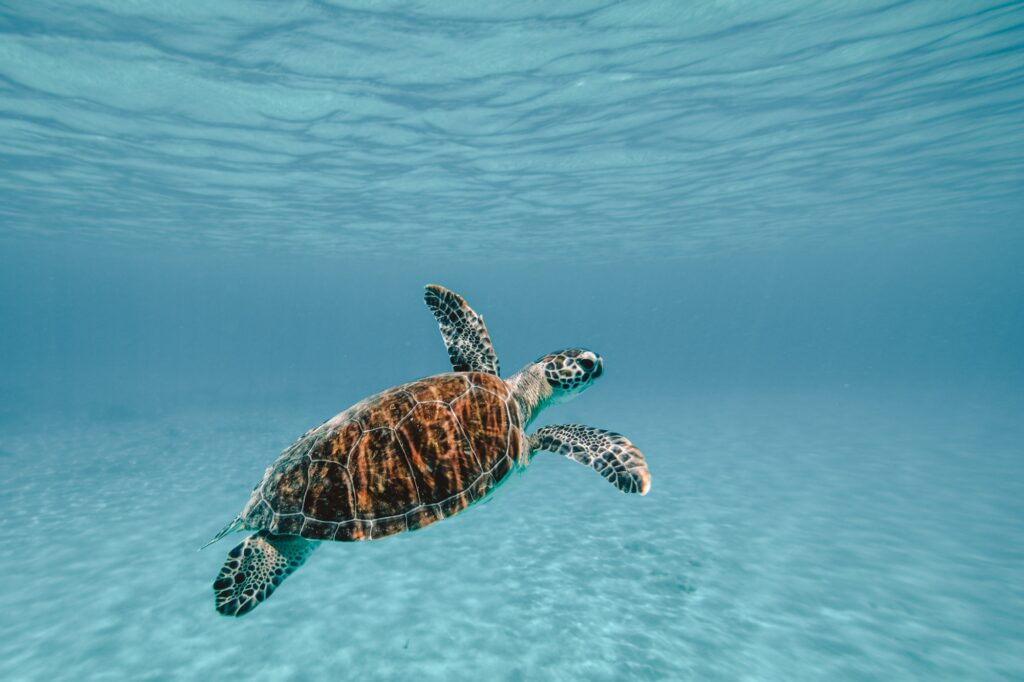
- Snorkelling – You don’t need to be a diver to enjoy the sea around the Gili Islands. Snorkelling is popular across all the islands, with reefs, tropical fish, and sea turtles often visible just offshore. There are also local boat trips and snorkelling tours available if you want to explore spots further out.
- Nightlife and Bars – If nightlife is high on your list, Gili Trawangan is the one most people head for. Beach bars, live music, late nights, and social crowds have helped give Gili T its reputation as the party island of the Gilis, although there are still quieter spots around, too.
- Circumnavigate the Island – One of the nicest things about the Gilis is how easy they are to explore. You can walk or cycle around most of them in a fairly short amount of time, passing beaches, cafes, bars, local villages, and quieter stretches of coastline along the way.
- Night Markets – Night markets are especially popular on Gili Trawangan, where you’ll find grilled seafood, satay, fried rice dishes, and cheap local food cooked fresh in front of you. They’re usually busiest in the evenings, when travellers gather for food before heading out for drinks or music.
- Cooking Classes – Cooking classes are available on some of the islands, usually focusing on Indonesian and Sasak-style cooking. Depending on where you go, the food and flavours can feel a bit different from what you might be used to in Bali, especially when it comes to seafood and Lombok influences.
- Yoga and Wellness – Although not quite on the same scale as Bali, yoga and wellness are still popular across the Gilis, especially on Gili Air and Gili Meno. You’ll find yoga classes, massage places, beachfront wellness spaces, and slower-paced accommodation aimed more towards relaxation than nightlife.
- Horse Riding – Horse riding is available in places, usually along the quieter beaches or coastline paths. Like the horse and carts used for transport, it’s one of those things that has become closely associated with the Gilis over the years, especially around sunset.

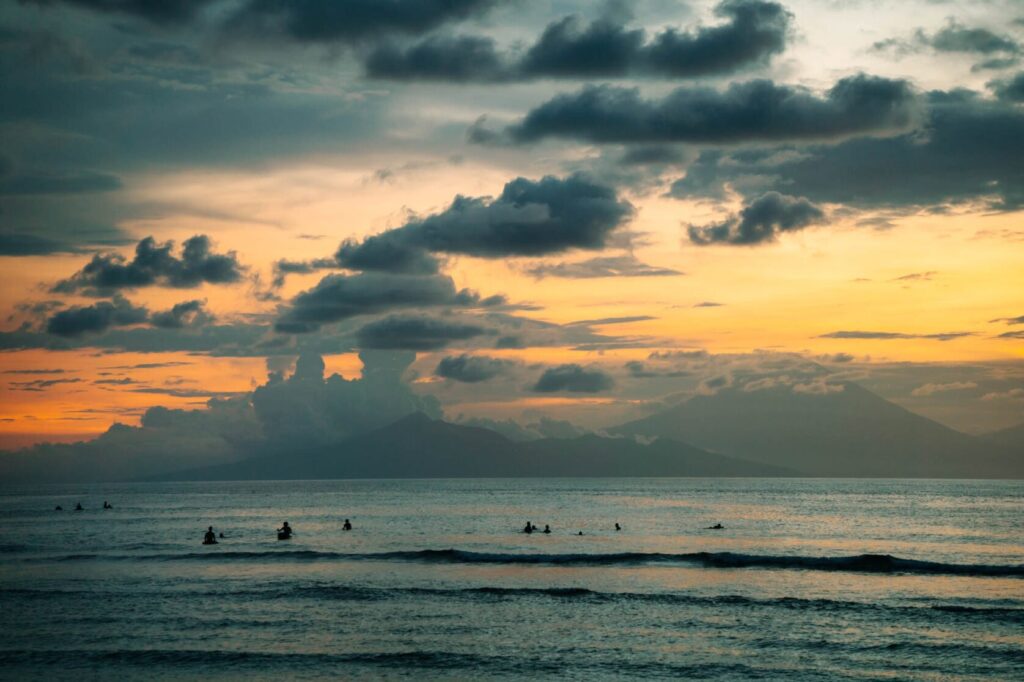
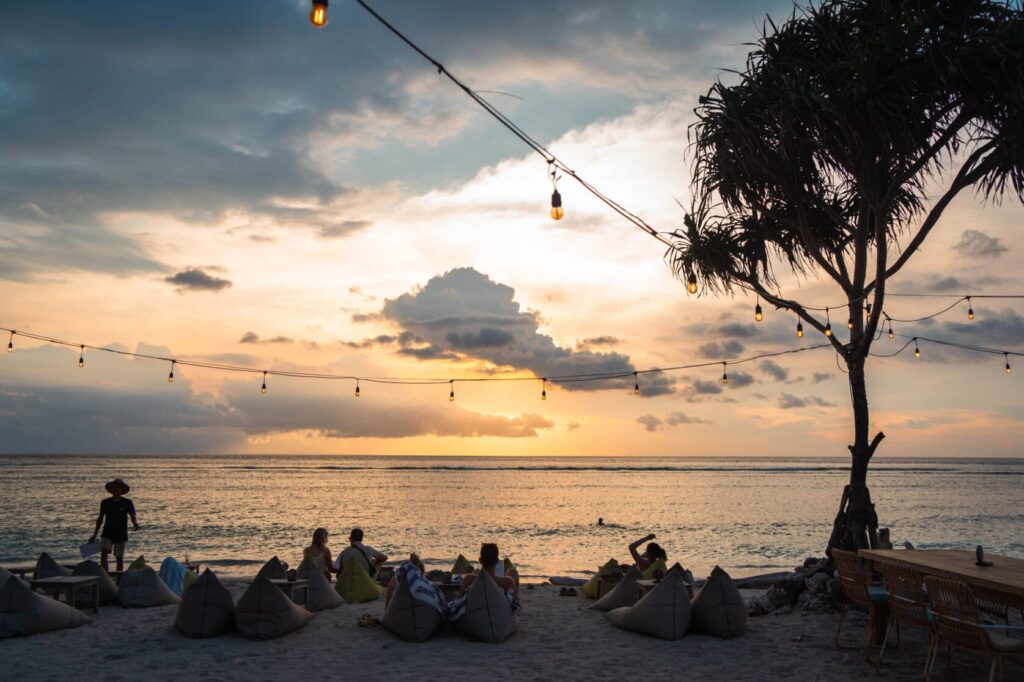
- Sunset and Sunrise -the Gili Islands can be great for both sunset and sunrise views. From the east side, you can see the sun rising behind Mount Rinjani on Lombok, while the west side gives views back towards Bali as the sun drops into the ocean. Gili Trawangan Beach, on the far west, is especially popular for sunsets.
- Beach Days – Sometimes the best thing to do on the Gilis is not much at all. The islands are well-suited to slower beach days, whether that means swimming, reading in the shade, grabbing food by the sea, or just relaxing near the water for a few hours.
- Island Hopping – Because they are located so close together, island hopping is easy and popular. Public boats regularly travel between the Gilis, and many travellers end up visiting all three at some point, even if they mainly stay on one.
The Sea Around The Islands
The sea around the Gili Islands is a huge part of what draws people there in the first place. Clear water, coral reefs, white sand beaches, and marine life make the islands especially popular for diving, snorkelling tours, and boat trips.
Some of the marine life commonly spotted around the islands includes:
- Sea Turtles – The Gilis are especially famous for sea turtles, particularly green turtles and hawksbill turtles. They’re commonly seen while snorkelling just offshore, especially around Gili Meno and Gili Air.
- Reef Sharks – Small reef sharks are sometimes spotted around deeper dive sites like Shark Point. Despite the name, they generally keep their distance from humans.
- Tropical Reef Fish – The coral reefs around the islands are filled with colourful tropical fish of all shapes and sizes, especially in the shallower snorkelling areas.
- Giant Clams – Giant clams can sometimes be seen attached to coral around the reefs, recognised by their large shells and colourful inner tissue.
- Coral Reefs – The reefs themselves are part of the attraction, with a mix of hard and soft coral surrounding much of the islands.
Dive Sites
The Gili Islands are one of the most popular scuba destinations in Indonesia, with dive sites suitable for both beginners and experienced divers. This is part of the Lombok Strait, where the water becomes extremely deep in places, helping create strong currents, underwater drop-offs, and rich underwater life.
Some dive sites are calm and ideal for learning, while others are known for drift diving and more challenging conditions. Divers sometimes even describe certain currents in the area as underwater waterfalls, where water movement suddenly changes direction or drops deeper through the strait.
Popular dive sites nearby include: Shark Point, Manta Dive, Deep Turbo, Halik Reef, Bounty Wreck, Air Wall, Frogfish Point, and Simon’s Reef.
What Is Accomodation Like On The Gili Islands?
Accommodation on the Gili Islands ranges from simple backpacker hostels to beachfront villas and resorts with private pools. What you choose usually comes down to which island you stay on, your budget, and what sort of atmosphere you’re looking for.
Gili Trawangan generally has the widest range of accommodation, especially for nightlife and social stays, while Gili Meno leans more towards quieter resorts and smaller places. Gili Air sits somewhere in the middle, with a mix of hotels, bungalows, and villas spread around.
Most places offer modern comforts like air-conditioned rooms and free Wi Fi, although standards can vary slightly depending on how remote or budget-friendly the accommodation is.
When Is The Best Time To Visit The Gili Islands?
The Gili Islands are a great year-round destination due to the tropical climate, but things change throughout the year, and there are several factors to consider, with the dry season generally being the preferred time to visit.
The dry season runs from May to October, bringing sunnier skies, calmer seas, and all-around better conditions for beach days, snorkelling, diving, etc.
The wet season, from November to April, brings more challenging weather conditions, but it can still be a great time to visit, with many preferring the fewer crowds and lower accommodation prices. It’s always nice to save money! Rain usually comes in short bursts rather than day-long downpours, much like Bali, with the mornings being sunny, and warm temperatures all day. Rougher seas can affect fast boat services between Bali and Lombok, though.

Just like in Bali, busy periods also line up with things like the holiday season in the Western world, with the busiest times being July and August, as well as Christmas and New Year. Different times of year affect the atmosphere, and peak season periods feel much busier and more lively, especially on Gili Trawangan, while quieter months tend to suit travellers looking for a slower island life experience.
For diving and snorkelling, the dry season is way better for visibility, though the abundant sea life can still be spotted year-round. Manta Rays aren’t as common here as they are around Nusa Penida, but if you do spot them, it’ll be between May and October.
Ramadan is another factor that can change the atmosphere slightly, though it’s not too obvious to the average traveller. The Muslim fasting festival lasts for one month, and moves around the calendar every year. During this time, some local businesses may adjust opening hours, and parts of the Gilis can feel quieter and more relaxed than usual during this period.
The Secret Gilis
As mentioned earlier, “Gili” simply means small island, and the three we’ve talked about in this article are the most well-known, but not the only ones.
There are several other smaller islands scattered around Lombok’s coastline, especially along southwest Lombok and parts of the northeast coast. These other Gili islands, often referred to as the Secret Gilis, are generally quieter, less developed, and visited far less than Gili Trawangan, Gili Air, or Gili Meno.
Some are little more than tiny islands with a few local boats visiting each day, while others have small resorts, coconut plantations, snorkelling spots, and a handful of places to stay. They’re not as easy to reach as the main Gilis, but for some travellers, that’s part of the appeal.
Top Tips For Visiting The Gilis
The Gili Islands are fairly easy places to travel around, but there are still a few things worth knowing before you arrive. From transport and local culture to sea conditions and practicalities, a bit of preparation can make your trip much smoother.
- Bring more cash than you think you’ll need, as ATMs can run out or stop working.
- Expect a slower pace of life and slower service at times compared to Bali.
- Respect local Muslim culture, especially away from the beach and in village areas.
- During Ramadan, parts of the islands can feel quieter than usual, with some local businesses changing opening hours and a greater expectation of respectful behaviour around local communities. Use reef-safe sunscreen and avoid touching coral or other sea life while snorkelling or diving.
- Be careful of strong currents around the Lombok Strait, and DO NOT attempt to swim between islands, they’re further apart than they look.
- Boat transport can get rough during bad weather, especially in rainy season conditions.
- Mobile signal and Wi Fi can vary depending on where you stay.
- Medical facilities are limited compared to Bali, especially for serious injuries.
- Be cautious with locally brewed spirits and unregulated alcohol. Methanol poisoning can be a thing in Indonesia; the Gili Islands are no exception.
- The whole place is not especially disability friendly, with sandy paths and uneven roads.
- Sudden bad weather can occasionally delay or cancel boats, leaving travellers stuck for longer than expected.
- Although the islands feel relaxed and loosely policed, Indonesian law still applies, so keep your wits about you.
FAQs
Are Gili Air And Gili Meno Quieter Than Gili T?
Yes. Gili Trawangan is the busiest and most developed of the three islands, and is widely known as the party island of the Gilis, especially around the bars on the east coast.
Gili Air is generally more relaxed, while Gili Meno is quieter still, with a slower pace and fewer places around the island overall. Which one suits you best really depends on what sort of atmosphere you’re looking for.
Are There Any Beach Clubs On The Gili Islands?
Yes, there are several beach clubs scattered across the islands, mostly on Gili Trawangan, which is famous for its nightlife scene. Of course, you won’t find anything on the same scale as the larger beach clubs in Bali.
Gili Meno and Gili Air also have beach clubs and beachfront bars, although the atmosphere is quite different. Gili Meno tends to be quieter and more romantic, while Gili Air has a more chilled vibe.
Final Thoughts On The Gili Islands
The Gili Islands might sit close together, but each one has its own personality, atmosphere, and pace of life. Whether you’re looking for nightlife and a laid-back beach escape, or somewhere quieter to switch off for a few days, there’s something that fits your style, and if you’re unsure, then just move on to the next island.
Despite how popular the Gilis have become over the years, they still manage to hold on to much of their slower island way of life, and it can make a nice change of scenery and culture from Bali for a few days.