Visiting temples is part of the Bali experience, whether you’re there for the views, the history, or just passing through on a day out. But it’s worth remembering that these aren’t just attractions, they’re active places of worship.
In this guide, we’ll run through some of the etiquette, what to expect, and how to act appropriately. Hopefully, after reading, you’ll be more at ease when visiting the island’s amazing temples.
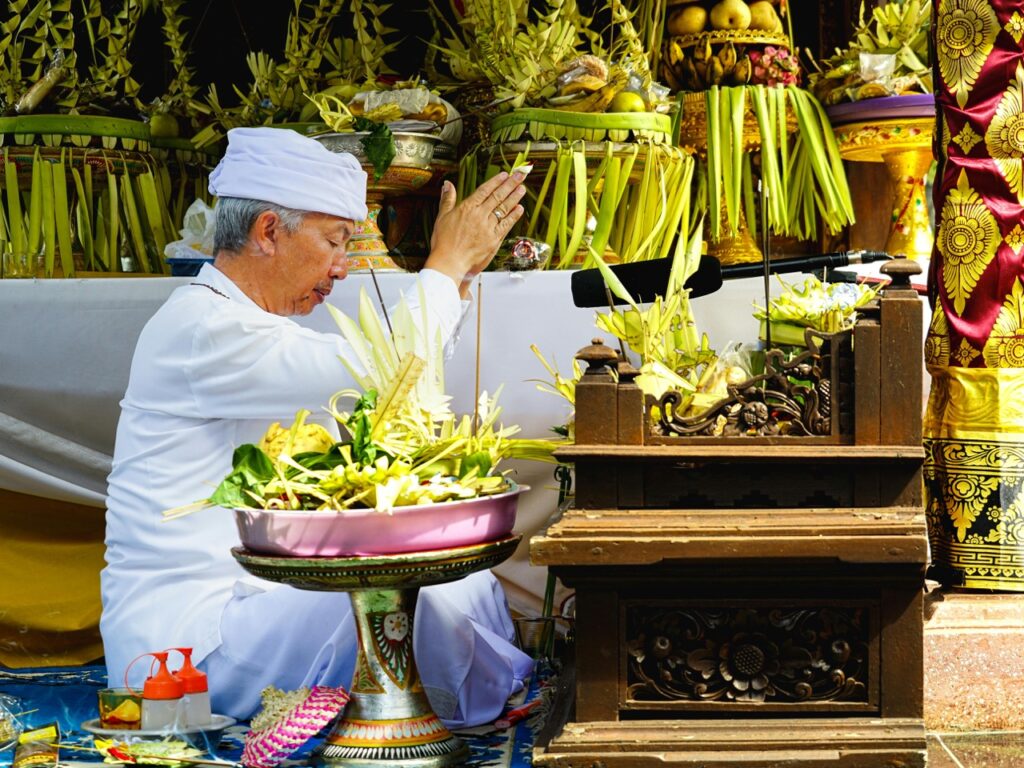
TL;DR, Summary Of Bali Temple Etiquette
- Dress modestly, follow local customs, and always show respect when visiting temples in Bali.
- Be mindful of your behaviour; keep quiet, don’t disrupt ceremonies, and follow the locals.
- Don’t worry, as long as you’re respectful and try your best, the locals will appreciate it.
A Note On Balinese Culture And Religion
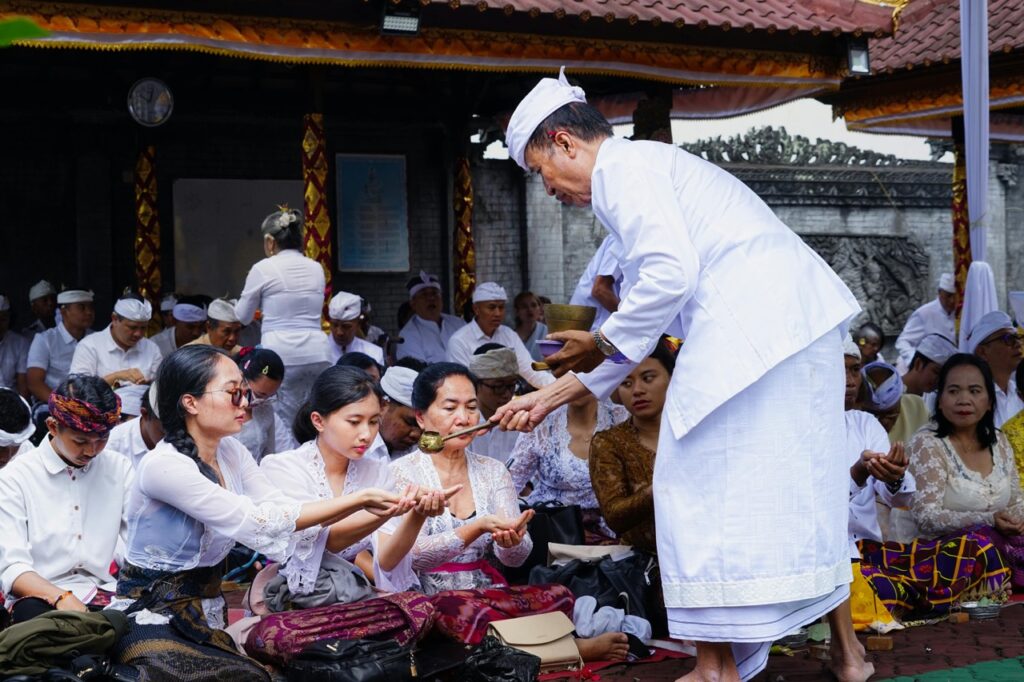
Balinese Hinduism is followed by over 85% people in Bali. A very unique religion, it’s almost exclusive to the island, save for a handful of people in nearby Lombok and Java.
It’s something you’ll notice straight away, not just in temples, but in daily life.
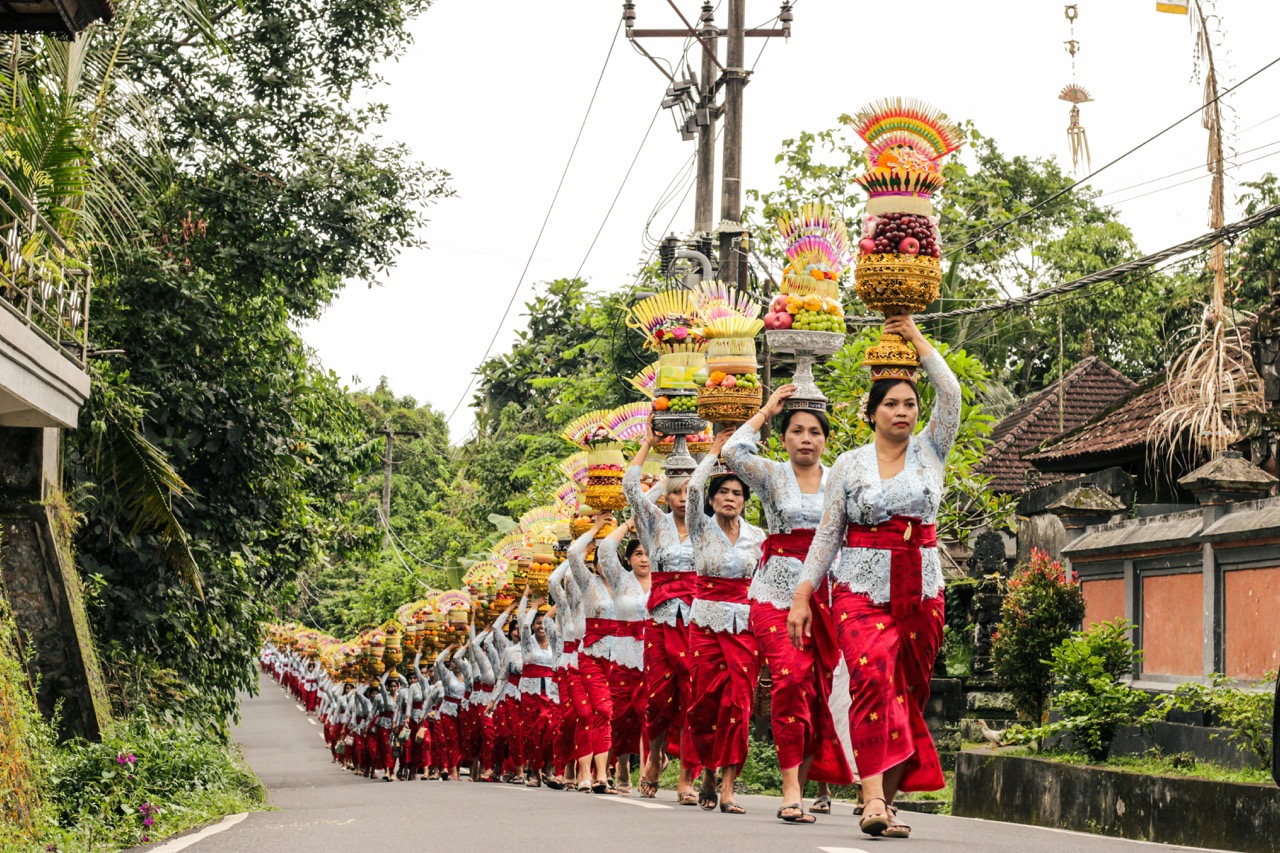
Offerings, ceremonies, and small shrines are part of everyday Balinese life, not just for special occasions.
There’s a strong focus on balance between people, nature, and the spiritual world, which is why temples are treated with such respect across the island.
Cultural Differences to Be Aware Of
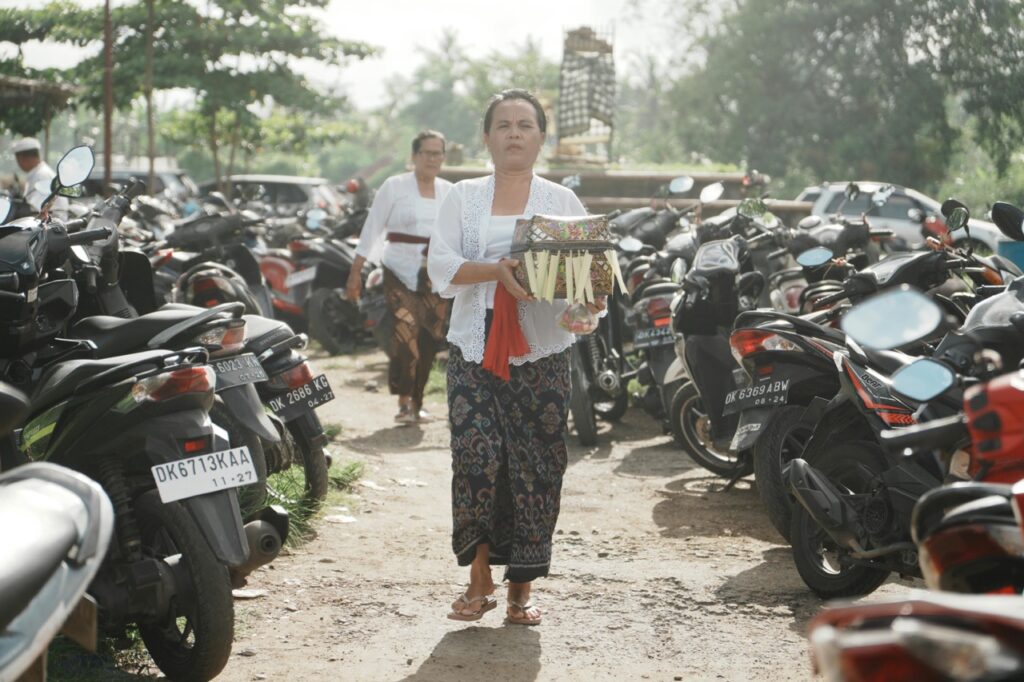
Some of the things that feel normal to you might come across differently in Bali, especially around temples. Simple habits like pointing, speaking loudly, or walking through a ceremony can be seen as disrespectful.
It’s not about strict rules as much as being aware of your surroundings and following the lead of locals.
A bit of awareness goes a long way, and most people will appreciate the effort even if you get something slightly wrong.
Balinese Temple Etiquette That Every Visitor Should Know Before They Go:
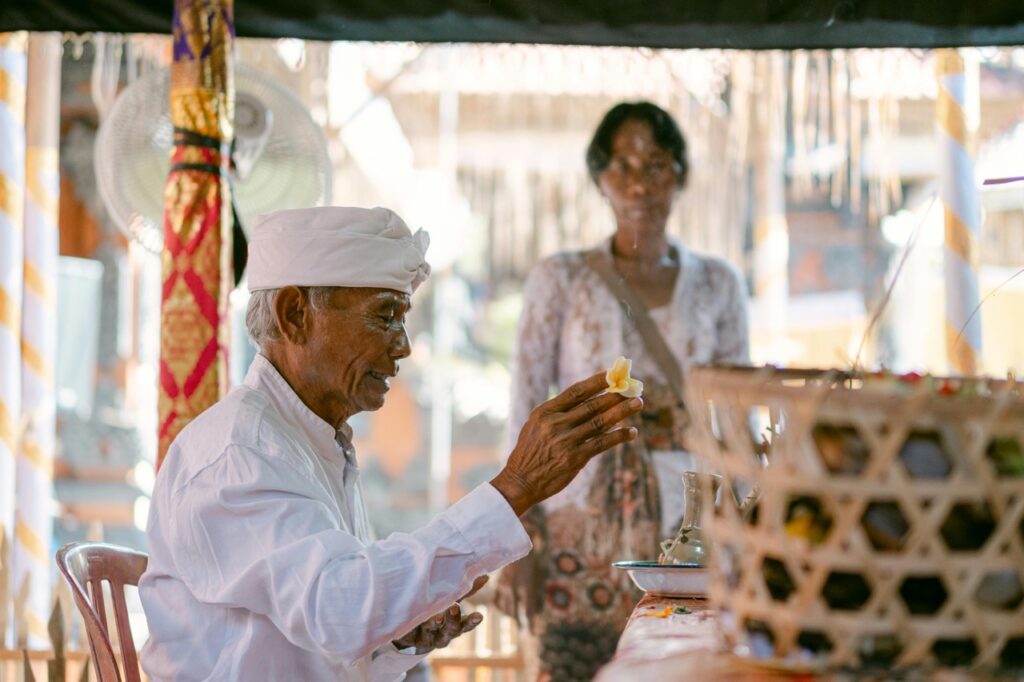
Adhere To The Dress Code
This is probably the most obvious one, and the easiest to follow, but it’s also the one people get wrong the most. It’s easy to forget, especially if you’re already out in shorts and decide to visit a temple on a whim. Bali is hot, everyone knows that, but the rules still apply.
You don’t need to turn up in full traditional dress, just dress respectfully and don’t walk into the temple wearing your beach gear. That means covering your shoulders and knees, so no tank tops or short shorts. A long skirt or similar is fine, or you can simply wear a sarong.
Don’t panic if you’re not dressed appropriately; many temples provide a sarong and sash at the entrance, so you can sort it out before heading in.
Avoid Pointing With Your Index Finger
Pointing with your index finger is something most of us do every day without thinking, but it’s considered disrespectful in Bali, both inside and outside of the temple! On sacred grounds such as temples, though, it’s much, much worse.


If you need to point to something, use your whole hand, indicate with a nod of your head, or maybe even subtly wave your hand in the general area. You’ll notice locals doing this in everyday life; try to follow their example.
It’s not a rule as such, just a small local custom that shows a bit of respect if you try to follow it.
Don’t Stand On Canang Sari
All over Bali, you’ll see small daily offerings on the ground, especially around temples, and in entrances and walkways.
These are called Canag Sari, and they’re part of daily life, not just for ceremonies. They might look simple, but they’re not; in fact, they carry a lot of meaning, and are carefully prepared and placed as offerings to the gods and spirits.
It’s easy to miss them if you’re not paying attention, particularly when walking around in a temple or moving around busy streets, but just take a second to look where you’re walking so as not to step on one. In fact, with the uneven grounds around some temples and on Bali’s streets, it’s a good idea to watch where you’re walking anyway!
If you do accidentally step on one, don’t panic; it happens. You’ll also notice cats, dogs and even monkeys stealing the offerings, but they’re ok, they get a free pass!
No Flash Photography
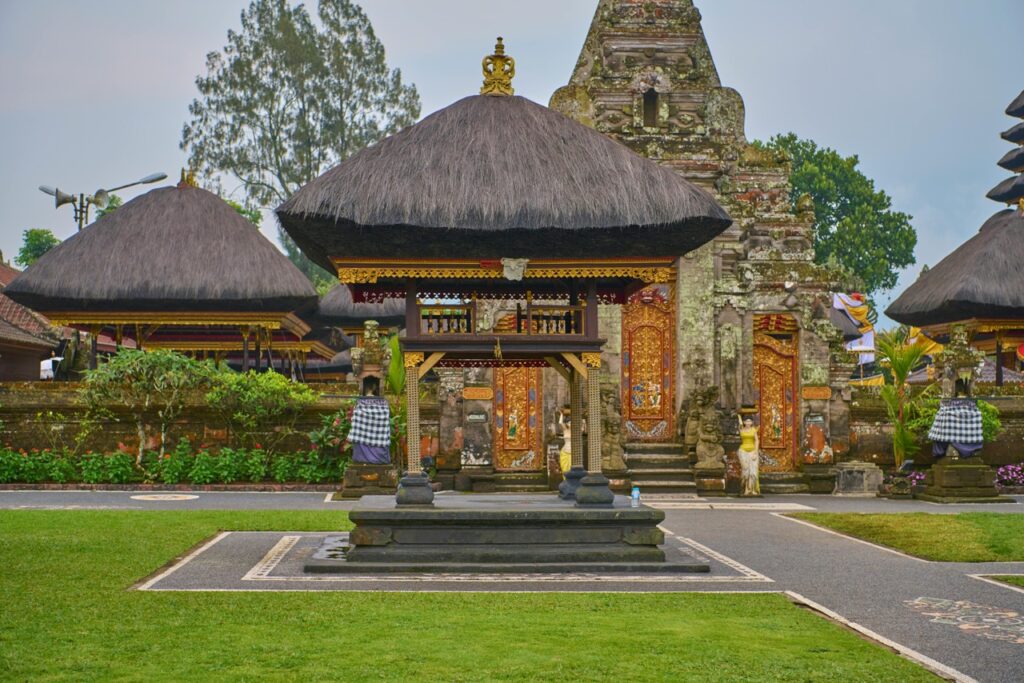
Photos are fine in most temples, but flash photography is not!
It can disrupt ceremonies and people praying, and it’s generally considered disrespectful. We all want the perfect shop to take home or post online, but it’s a place of worship and a photography studio.
If you’re taking photos, keep it simple and low-key. Turn the flash off, don’t climb on statues or structures and think about who or what you’re photographing.
If in doubt, look around and see what the locals are doing.
Menstruating Women Cannot Enter
This is one of the more sensitive rules, but it’s still widely followed across Bali. Women who are menstruating are traditionally not allowed to enter temple grounds.
The belief is linked to ideas around purity within Balinese Hinduism, and it applies across most sacred places, from smaller local shrines to major temples.
The same idea can apply after giving birth or if there is an open wound that’s bleeding. It’s not about excluding anyone personally, but about respecting long-standing customs that are still part of daily life on the island.
If this applies to you, it’s best to skip the temple and plan it for another day.
Avoid Using Your Left Hand
This is a small habit that will gain you some respect both inside and outside of the temple.
The left hand is seen as being unclean, so it’s not to be used when giving or receiving things, especially in the temple. If you’re handed something, or you’re offering something back, use your right hand where possible.


It applies to anything from passing over small items to giving offerings. People aren’t going to call you out on it for making a mistake, but try to get in the habit of it during your time in Bali; it’s a basic sign of respect.
It’s something to take on your travels with you, too, as Bali is not the only place that follows this.
Avoid Loud Conversations
Temples in Bali are generally calm places, unless there’s a festival or dance performance taking place. They’re places of worship and reflection, and it’s best to keep your noise down a bit while you’re there. Speaking loudly, shouting or getting overexcited is seen as pretty disrespectful.
It’s fine to talk, of course, just keep it at a low level and be aware of where you are. If you see something interesting taking place, then just stand back and observe it; there’s no need to talk over it.
If you have children, try to explain to them that they, too, should be quiet and calm. Everyone knows that sometimes children can be difficult, and if your child is playing up, you’re not going to get into any trouble; just calmly remove them from the setting.
Don’t Point Your Feet At Sacred Objects
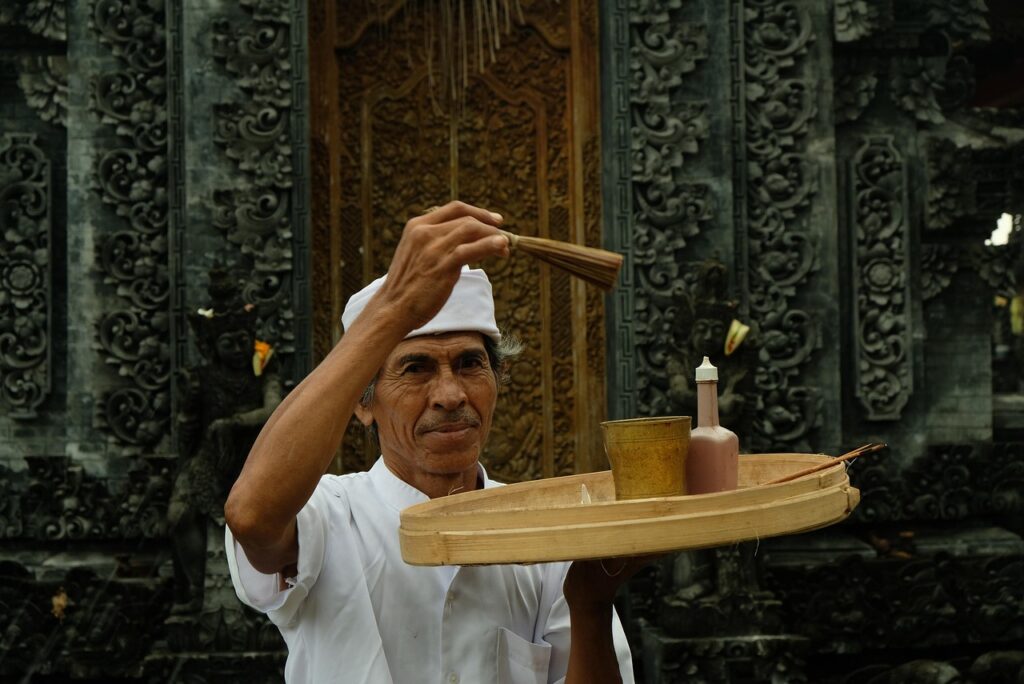
In Bali, feet are considered the lowest part of the body, and the least clean, so pointing at them at anything sacred is disrespectful. This includes altars, statues and any other holy objects around temple grounds, and also the priests and worshippers there.
If you’re sitting down, thinking about your position. Sitting cross-legged or with your legs tucked behind you is the best option, especially if people are praying nearby.
Don’t Stand Or Sit Higher Than A Priest
Religious hierarchy matters in Bali. Priests and people leading ceremonies hold a respected position, so it’s considered inappropriate to stand or sit higher than them.
If you’re watching a ceremony, don’t climb any steps, platforms, or walls to get a better view. Even something small like a raised ledge could put you higher than them, so be extra cautious.
If you approach a priest, be sure to keep your head down and lower your body slightly, should you be taller than they are. If you have a genuine interest in something going on, and you don’t know where you should stand or sit, then the temple staff are usually willing to help.
Respect Worshippers and Ongoing Ceremonies
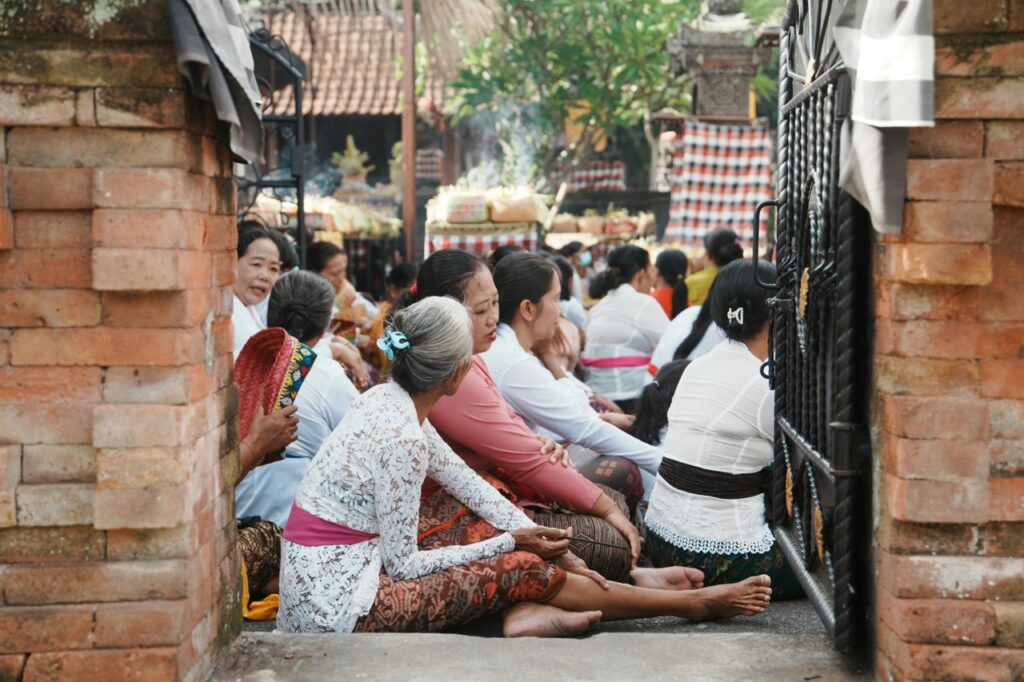
Temples in Bali are active places of worship, so if you visit during a ceremony, remember that it’s not a performance. People are there to pray, make offerings, and take part in rituals that are part of their daily life.
If something is happening, keep a respectful distance and avoid walking through the ceremony or getting too close. Don’t stand in front of people while they’re praying or block their view just to get a better look or take photos.
It’s fine to watch, just do it quietly and from the side. Give people space, and let everything carry on without interruption. Remember, this is a spiritual event for them.


Use Your Common Sense
Most of the temple etiquette in Bali comes down to simple awareness. Think about how you’d behave in any place of worship, keep things respectful, stay calm, and be mindful of what’s going on around you.
Avoid public displays of affection, don’t treat it like an Instagram spot, and don’t climb on statues or structures for photos. These are sacred spaces, not somewhere to mess around or push boundaries.
You don’t need to overthink it. If something feels like it might be inappropriate, it probably is. Just take a step back, observe, and act accordingly.
FAQs
Can I Get Involved With Temple Worship?
In most cases, temple ceremonies are for locals and are not something tourists are expected to join in with. You’re usually welcome to observe, but it’s important to do so respectfully and without getting in the way.
That said, there are some temples and guided experiences where visitors can take part in certain rituals, especially if you’re invited, or it’s clearly set up for that purpose. The priests at Tanah Lot will bless visitors, for example, or you might be invited to something by a Balinese family.
If you do get involved, just remember to respect temple etiquette, remember what you read in this guide, and follow the lead of the Balinese people.
Do Some Of These Rules Apply Outside Of The Temple?
Yes, many of these guidelines aren’t just limited to temples, but reflect broader basic courtesies in Balinese life. When visiting local markets, villages, or interacting with people, it’s important to stay mindful of local culture and customs.
Simple things like dressing modestly away from the beach, speaking politely, avoiding stepping on offerings, and using your right hand when giving or receiving items all carry over into everyday situations.
Balinese culture places a strong emphasis on respect, harmony, and positive energy, so being calm, patient, and considerate will go a long way wherever you are on the island.
How Do You Greet People In Bali?
A common greeting in Bali is “Om Swastiastu”, a respectful greeting used to show respect and goodwill. It’s commonly used when meeting people, entering temples, or starting a conversation.
As a visitor, you don’t have to use it, but you’ll earn a little bit of respect if you do.
Final Thoughts On Bali Temple Etiquette
Visiting a temple in Bali doesn’t need to feel like a complicated affair.
Most of it comes down to being aware of where you are and a bit of common sense. Dress appropriately, keep things respectful, and follow the lead of locals if you’re unsure.
You don’t need to get everything perfect, but making the effort matters. A bit of respect goes a long way, and it’s what turns a quick temple visit into a worthwhile experience.